
 Pin to board
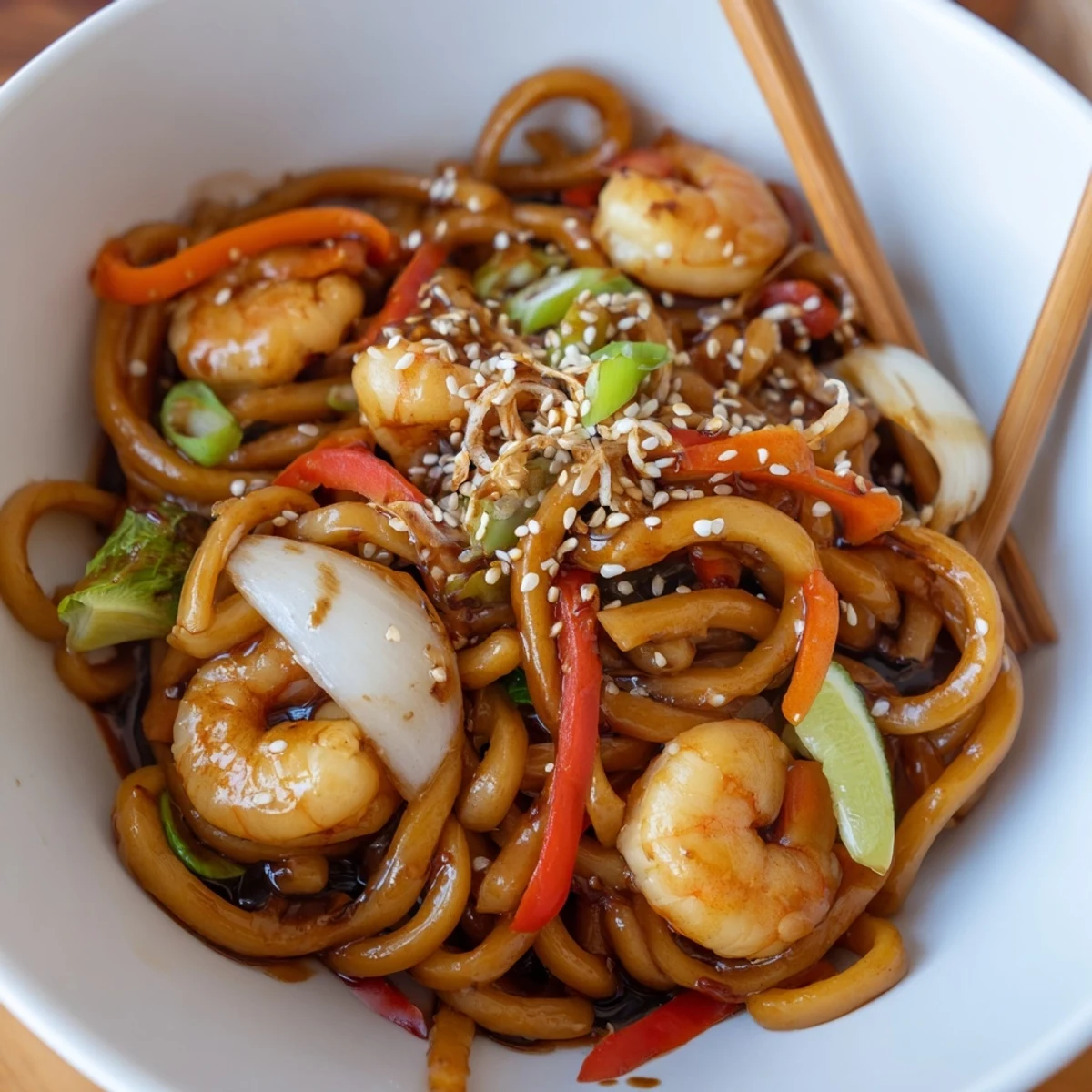
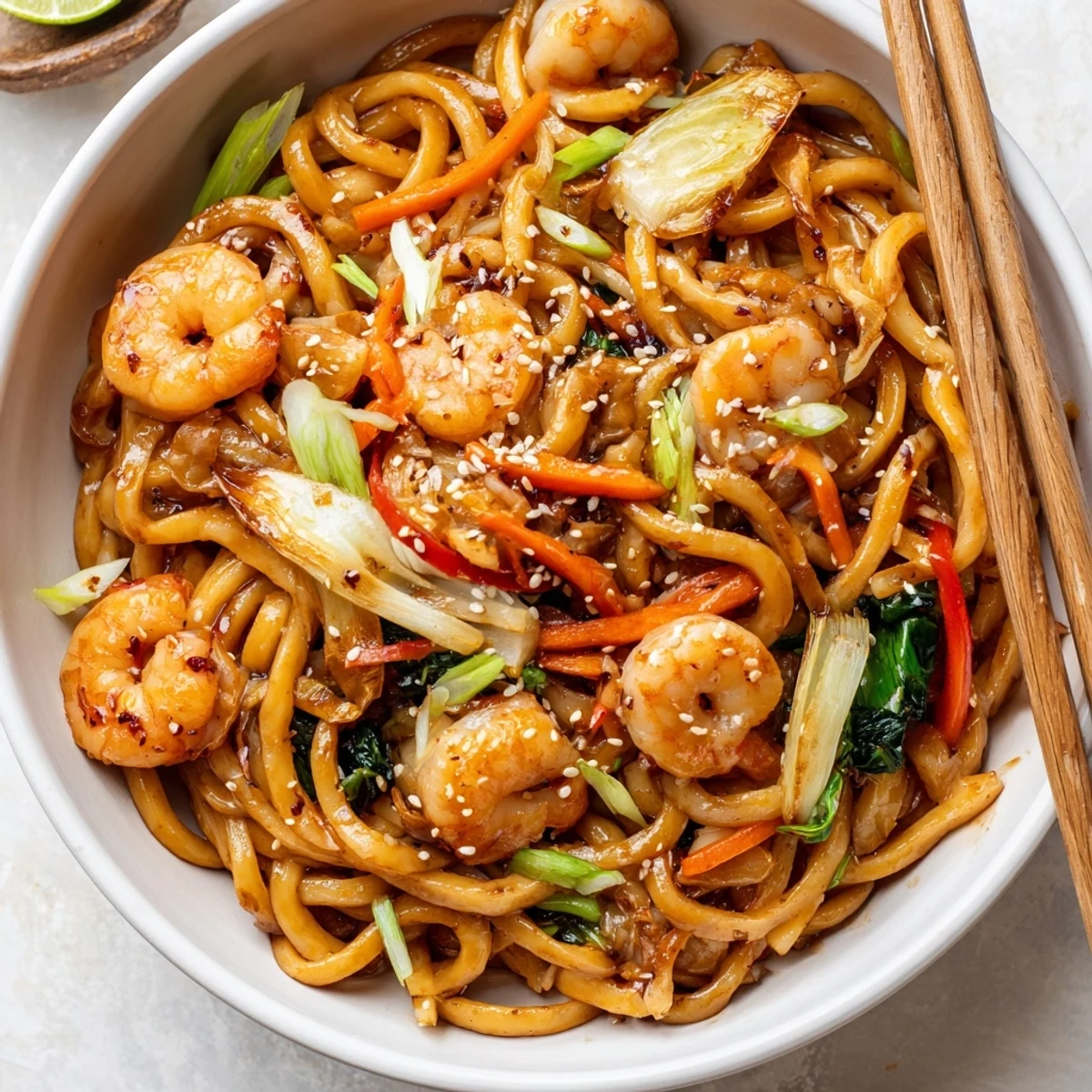
 In about 30 minutes serve 4: plump shrimp and chewy udon are stir-fried with julienned carrot, sliced onion, bell pepper and greens. A quick soy-oyster-mirin sauce brings umami; garlic and ginger add depth. Cook noodles ahead, sear shrimp briefly, then toss everything over high heat until glossy. Swap protein for tofu or mushrooms, finish with sesame seeds, nori, and lime.
The sizzle of shrimp hitting a screaming hot wok on a Tuesday evening is one of those sounds that instantly makes a kitchen feel alive, and this yaki udon has been my go-to rescue meal ever since a typhoon warning trapped me inside with nothing but a bag of frozen udon and some leftover shellfish.
My neighbor once knocked on my door mid stir fry to ask what smelled so incredible, and she ended up staying for dinner with a bowl in hand, which tells you everything about the magnetic pull of this dish.
Ingredients
- 400g large shrimp, peeled and deveined: Fresh or frozen both work beautifully, but pat them completely dry before they hit the pan so you get a proper sear instead of a steam.
- 400g fresh or frozen udon noodles: The thick, chewy texture is what makes this dish satisfying in a way thinner noodles never could.
- 1 small carrot, julienned: Cutting it into thin matchsticks ensures it cooks quickly and absorbs the sauce evenly.
- 1 small onion, thinly sliced: A humble base that sweetens and softens into the background of every bite.
- 1 red bell pepper, thinly sliced: Adds a pop of color and a subtle sweetness that balances the salty sauce.
- 2 cups baby spinach or bok choy: Either works, but bok choy gives a satisfying crunch if you want more texture.
- 2 green onions, sliced: Tossed in at the very end so they stay bright and fresh.
- 3 tbsp soy sauce: The backbone of the sauce, and a good quality one makes a real difference here.
- 2 tbsp oyster sauce: This is where the deep, rounded umami character comes from, so do not skip it.
- 1 tbsp mirin: Adds a gentle sweetness and glossy finish that ties everything together.
- 1 tsp sesame oil: Just a teaspoon is enough to perfume the entire dish with its nutty warmth.
- 2 tsp sugar: Balances the saltiness and helps the sauce cling to every strand of noodle.
- 2 cloves garlic, minced: Fresh garlic only, and keep it ready because it cooks in seconds.
- 1 tbsp fresh ginger, grated: I keep a knob of ginger in my freezer so I always have some on hand for exactly this moment.
- 2 tbsp vegetable oil: Divided between cooking the shrimp and sauteing the vegetables.
- Toasted sesame seeds, shredded nori, and lime wedges: Optional but highly recommended garnishes that elevate the final dish from weeknight quick to something special.
Instructions
- Mix the sauce first:
- Whisk together the soy sauce, oyster sauce, mirin, sesame oil, and sugar in a small bowl until the sugar dissolves completely, then set it aside within arms reach of your stove.
- Prepare the noodles:
- Cook the udon according to the package directions, drain them well, and toss lightly with a drop of oil so they do not clump while you wait.
- Sear the shrimp:
- Heat one tablespoon of oil in a large wok or skillet over medium high heat, then stir fry the shrimp for two to three minutes until they turn pink and opaque before removing them to a plate.
- Wake up the aromatics:
- Add the remaining oil to the same pan and saute the garlic and ginger for about thirty seconds just until you can smell them, being careful not to let the garlic brown.
- Toss the vegetables:
- Add the onion, carrot, and bell pepper to the pan and stir fry for three to four minutes until they are just tender but still have some bite left in them.
- Bring it all together:
- Return the shrimp to the pan, add the cooked noodles, pour the sauce over everything, and stir vigorously so each noodle gets coated in that glossy, savory mixture.
- Finish with greens:
- Toss in the spinach or bok choy and sliced green onions, stir frying for one final minute until the greens just wilt and the whole kitchen smells incredible.
 Pin to board
 The night my daughter asked for thirds of this noodles, I realized it had quietly become the most requested dinner in our house, beating out even pizza night.
Making It Your Own
Chicken thighs cut into bite sized pieces work just as well as shrimp if you are feeding someone with a shellfish allergy, and cubed extra firm tofu pressed dry and pan fried until golden turns this into a satisfying vegetarian meal.
Turning Up the Heat
A drizzle of chili oil at the end or a few slices of fresh red chili tossed in with the garlic will completely change the personality of this dish without altering anything else about the recipe.
What to Serve Alongside
A cold glass of sake or a crisp Sauvignon Blanc cuts through the richness of the sauce perfectly, and a simple cucumber salad on the side keeps the meal feeling balanced.
- Chill your serving bowls in the freezer for five minutes before plating if you want to keep the noodles from sticking together.
- Leftovers reheat beautifully in a skillet with a splash of water to loosen the sauce.
- Always taste the sauce before adding it to the pan and adjust the sugar or soy to your preference.
 Pin to board
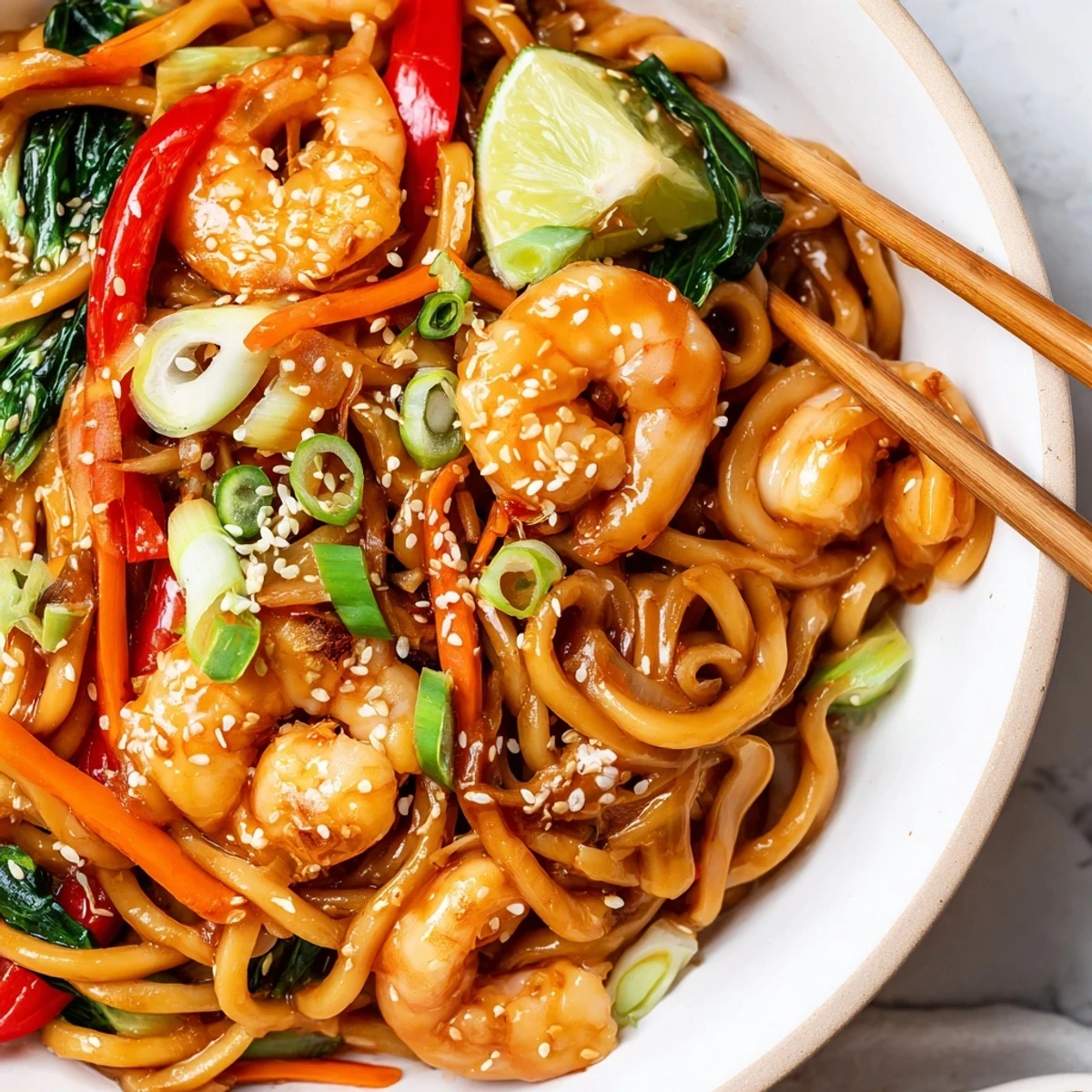
 Some meals simply earn their place in the regular rotation, and this shrimp yaki udon deserves every encore it gets. Grab your wok and let the sizzle do the talking.
Recipe FAQs
- → How can I keep udon from clumping when stir-frying?
-
Rinse fresh or frozen udon under hot water to loosen strands, drain well, and toss with a little oil before adding to the pan. If using packaged noodles, follow package timing so they remain firm, then separate with tongs while stir-frying over high heat.
- → What's the best way to cook shrimp so they stay tender?
-
Pat shrimp dry and cook over medium-high to high heat for just 2–3 minutes until pink and opaque. Remove them early and return at the end to avoid overcooking; carryover heat will finish them while maintaining a tender texture.
- → Can I use dried udon or other noodles?
-
Dried udon works if boiled according to package directions and fully drained. You can also swap for thicker wheat noodles or udon-style rice noodles for a gluten-free play, adjusting cooking time and sauce absorption accordingly.
- → How do I make the sauce gluten-free?
-
Substitute tamari or a gluten-free soy sauce for regular soy sauce and replace oyster sauce with a mushroom-based oyster-style sauce or extra mirin and a splash of umami mushroom stock to maintain depth.
- → How can I add heat without overpowering the dish?
-
Add a touch of chili oil, toasted chili flakes, or thinly sliced fresh chili while stir-frying the vegetables. Start small, taste, and increase gradually so the umami balance remains prominent.
- → What’s the best way to store and reheat leftovers?
-
Cool quickly and refrigerate in an airtight container for up to 2 days. Reheat in a hot skillet with a splash of water or oil to revive the noodles and prevent drying; add a squeeze of lime and fresh greens after warming.