
 Pin to board
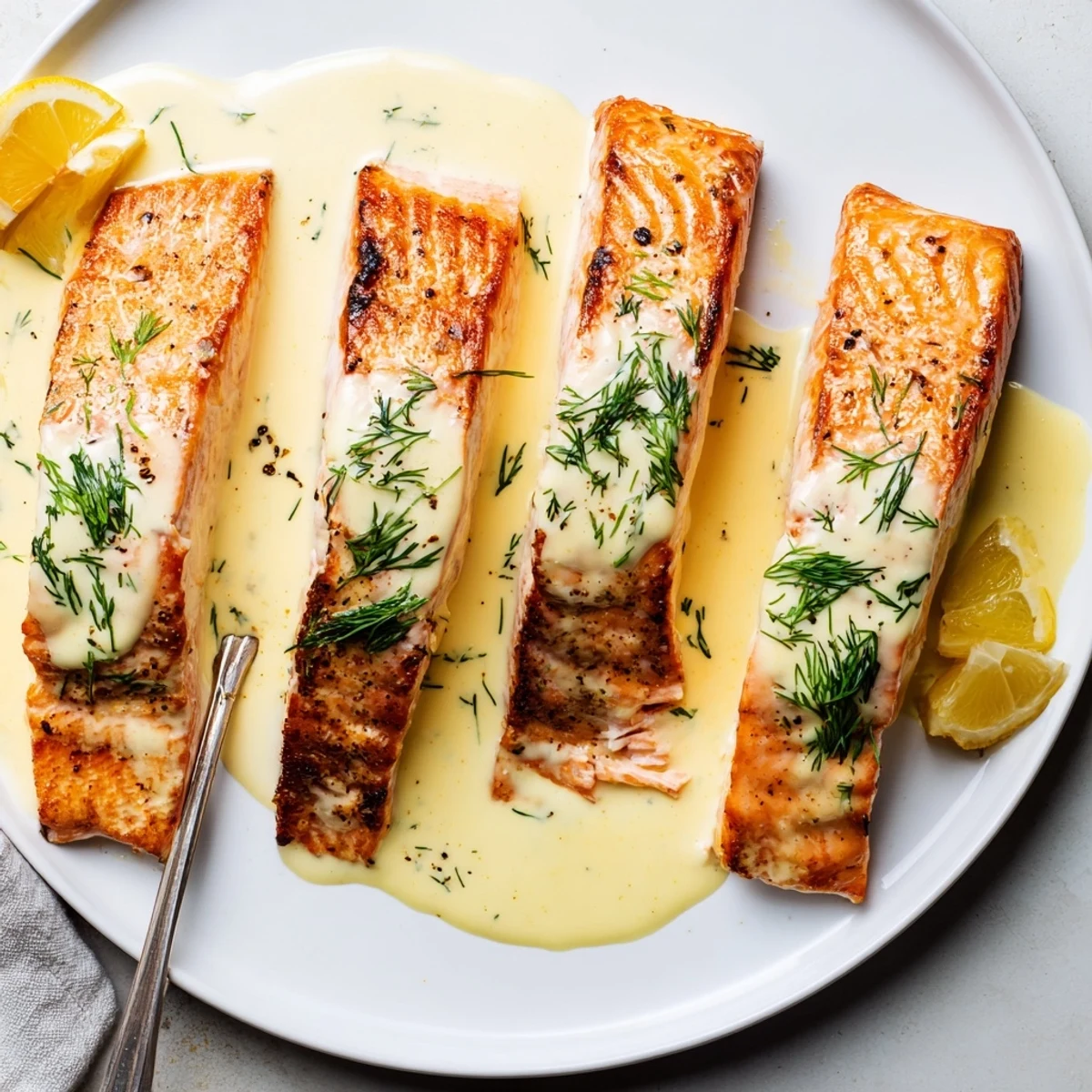
 Pan-sear seasoned salmon fillets until golden and just cooked through, then remove and keep warm. In the same skillet, melt butter and sauté garlic, deglaze with dry white wine or stock, then stir in heavy cream, lemon juice and zest. Simmer until slightly thickened, fold in chopped dill, return the salmon and spoon the sauce over each piece. Serve immediately with steamed vegetables or roasted potatoes; for a lighter finish, use half-and-half or crème fraîche.
The sizzle of salmon hitting a hot pan is one of those sounds that makes everyone in the house wander toward the kitchen, pretending they need a glass of water. My neighbor Claude actually taught me this lemon cream sauce trick one rainy Tuesday when he stopped by with a bag of lemons from his tree and refused to let me just make toast. That sauce changed everything about how I cook fish on a weeknight.
I made this for my sister the night she got her promotion and she literally licked the plate when she thought nobody was looking. The lemon cream sauce pooled around the salmon like it belonged in a magazine, and we sat at the table talking for two hours after the plates were empty. It has become my go to whenever someone needs to feel a little spoiled.
Ingredients
- 4 skinless salmon fillets, about 6 oz each: Try to grab fillets of similar thickness so they finish cooking at the same time and nobody gets a dry piece.
- Salt and freshly ground black pepper: Season the fish generously on both sides, it makes a surprising difference.
- Olive oil: A tablespoon is all you need for a gorgeous golden sear.
- Unsalted butter: This is the foundation of the sauce, so use good quality butter if you have it.
- Garlic, finely minced: Two cloves is perfect, but I have been known to sneak in a third.
- Dry white wine or fish stock: Wine adds wonderful depth but stock works beautifully if you prefer to skip alcohol.
- Heavy cream: This is what makes the sauce feel indulgent and coats the salmon like velvet.
- Fresh lemon juice and zest: Use a real lemon, not the bottled stuff, because the zest carries fragrant oils that make the sauce sing.
- Fresh dill or parsley, chopped: Dill is my favorite here but parsley is a solid backup if that is what you have.
Instructions
- Prep the salmon:
- Pat the fillets thoroughly dry with paper towels and season both sides with salt and pepper. Dry fish sears better, so do not skip this step.
- Sear the fillets:
- Heat olive oil in a large nonstick skillet over medium high heat until it shimmers. Lay the salmon flesh side down and cook 3 to 4 minutes per side until golden and just cooked through, then transfer to a plate and cover loosely with foil.
- Start the sauce:
- Reduce the heat to medium and melt the butter in the same pan. Add the minced garlic and stir for about a minute until your kitchen smells incredible.
- Build the flavor:
- Pour in the white wine or stock and let it simmer for 2 to 3 minutes, scraping up all those gorgeous browned bits from the bottom of the pan.
- Add the cream and lemon:
- Stir in the heavy cream, lemon juice, and lemon zest. Let it simmer gently for 3 to 4 minutes until it thickens enough to coat the back of a spoon.
- Finish with herbs:
- Stir in the chopped dill or parsley and taste the sauce, adjusting salt and pepper as needed.
- Bring it all together:
- Return the salmon to the pan and spoon the sauce over each fillet. Cook for just 1 to 2 minutes to warm the fish through, then serve right away with extra herbs and lemon wedges.
 Pin to board
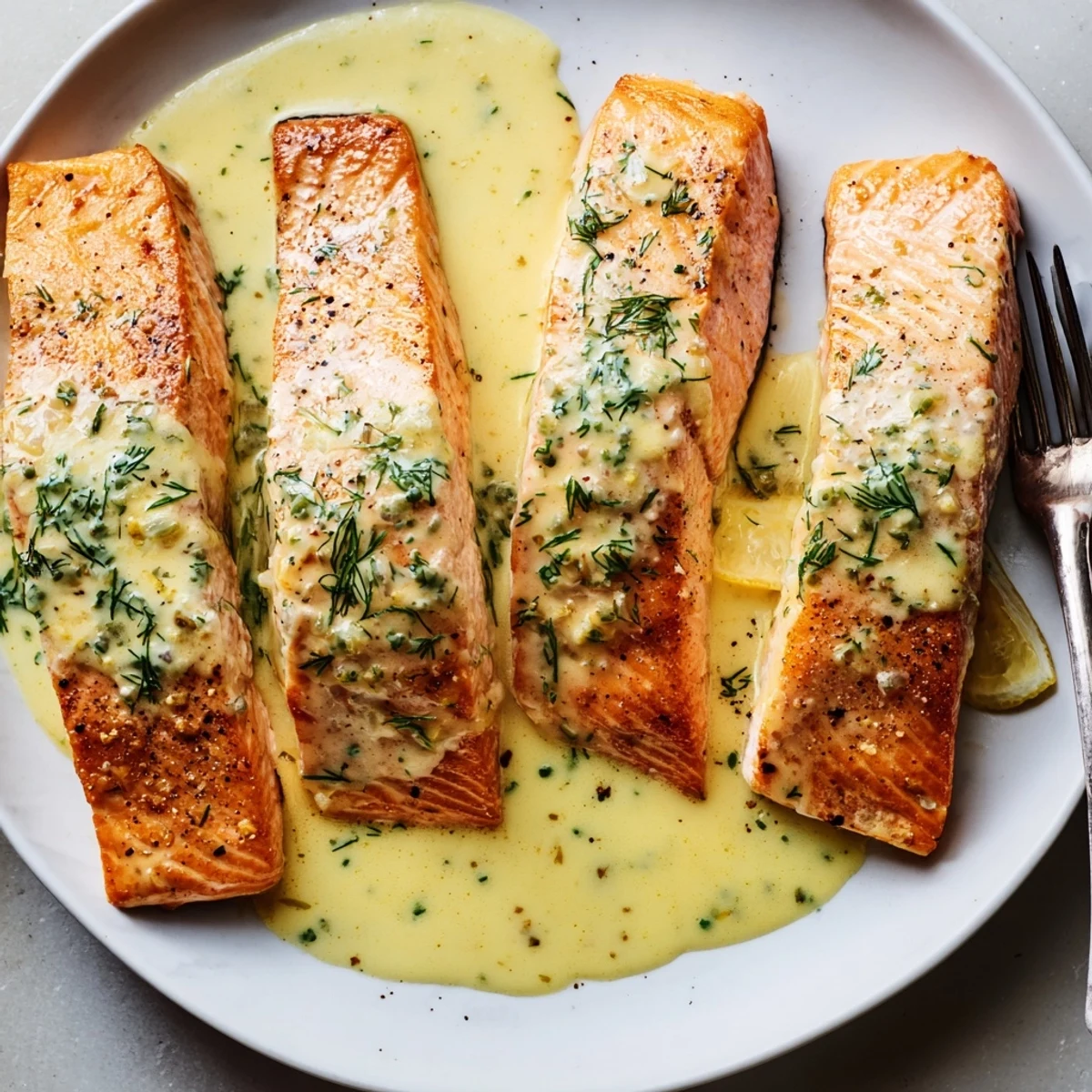
 There is something about the color of golden salmon nestled in that pale creamy sauce with bright flecks of green dill that makes the whole table go quiet for a moment. It is the kind of dish that turns an ordinary Tuesday into something worth remembering.
What to Serve Alongside
Steamed green beans or roasted asparagus are my usual picks because they soak up the extra sauce beautifully. Roasted potatoes with crispy edges or a mound of fluffy rice work just as well if you want something heartier. The sauce is so good you will want something on the plate to catch every last drop.
Making It a Little Lighter
If heavy cream feels too rich for a weeknight, half and half or a spoonful of creme fraiche thinned with a splash of stock works surprisingly well. The sauce will be a bit less velvety but still completely delicious. I have also stirred in a teaspoon of Dijon mustard on nights I wanted a little extra personality, and it was a revelation.
Tools and Quick Reminders
A large nonstick skillet is really the hero here because it gives you a great sear without sticking and makes the sauce cleanup painless. Keep a thin spatula handy for flipping the salmon gently.
- A zester or microplane makes quick work of the lemon and ensures fine fragrant strands.
- Have all your sauce ingredients measured and ready before the fish comes out of the pan.
- Remember this dish contains both fish and dairy, so check with guests about allergies beforehand.
 Pin to board
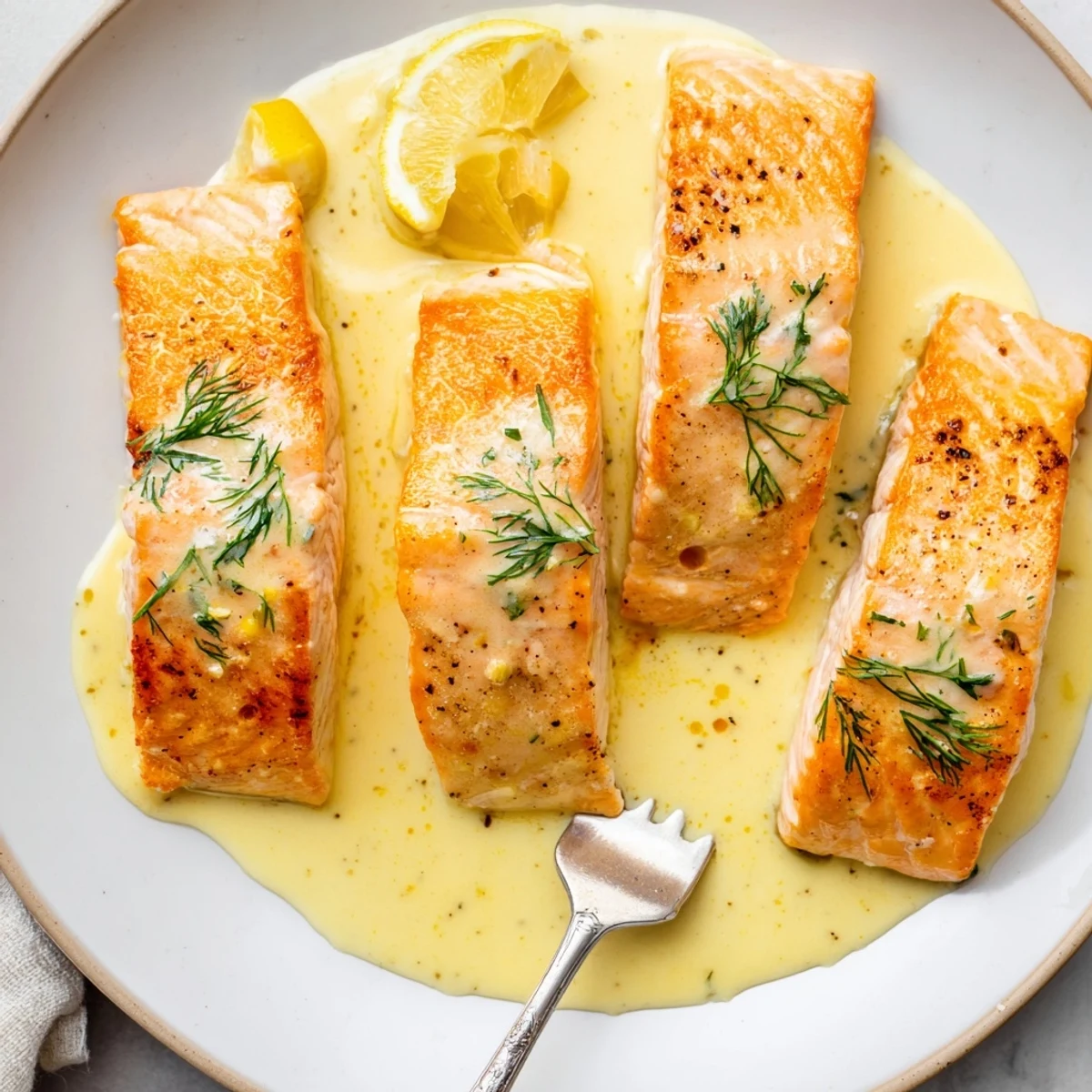
 Cook this once and it will live in your back pocket forever, ready to impress at a moments notice. Trust me, the plate licking will happen.
Recipe FAQs
- → How long should I cook the salmon fillets?
-
Cook 6 oz fillets about 3–4 minutes per side over medium-high heat, until the exterior is golden and the flesh is opaque and flakes easily. Thicker pieces may need an extra minute; aim for an internal temperature around 125–130°F for medium doneness.
- → Can I use skin-on salmon instead of skinless?
-
Yes. If using skin-on, sear skin-side down first to render and crisp the skin, then flip briefly on the flesh side. You can remove the skin before serving if preferred, but it helps hold the fillet together while cooking.
- → How do I thicken the lemon cream sauce if it stays thin?
-
Simmer the sauce gently to reduce and concentrate, which will naturally thicken it. For a quicker fix, whisk a small cornstarch slurry (1 tsp cornstarch + 1 tbsp cold water) into the simmering sauce, or finish with a small pat of cold butter for added silkiness.
- → What can I substitute for the white wine?
-
Use low-sodium fish or vegetable stock to keep depth without alcohol, or a splash of dry vermouth. For a non-alcohol option, a light chicken stock or a mix of water and a teaspoon of white wine vinegar works in a pinch.
- → Can the sauce and salmon be made ahead?
-
Yes. Store the salmon and sauce separately in the refrigerator for up to 48 hours. Gently reheat the sauce over low heat, add a splash of stock or cream if needed, and warm the salmon briefly in the pan or under a low oven to avoid overcooking.
- → What side dishes and wines pair well?
-
Serve with steamed greens, roasted potatoes, or rice to soak up the sauce. A crisp Sauvignon Blanc or Pinot Grigio complements the lemon and cream, while a light-bodied Chardonnay adds a richer match.