
 Pin to board
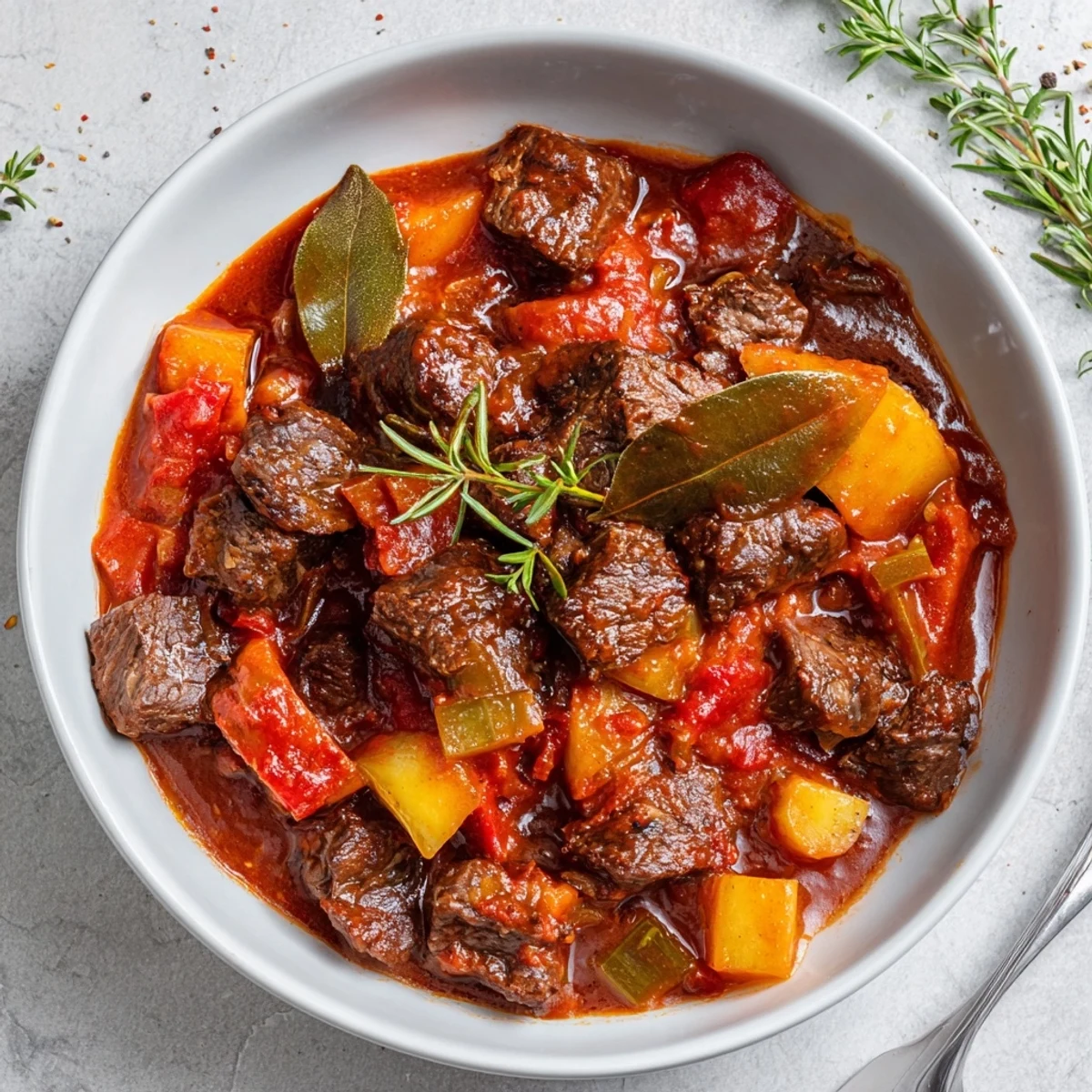
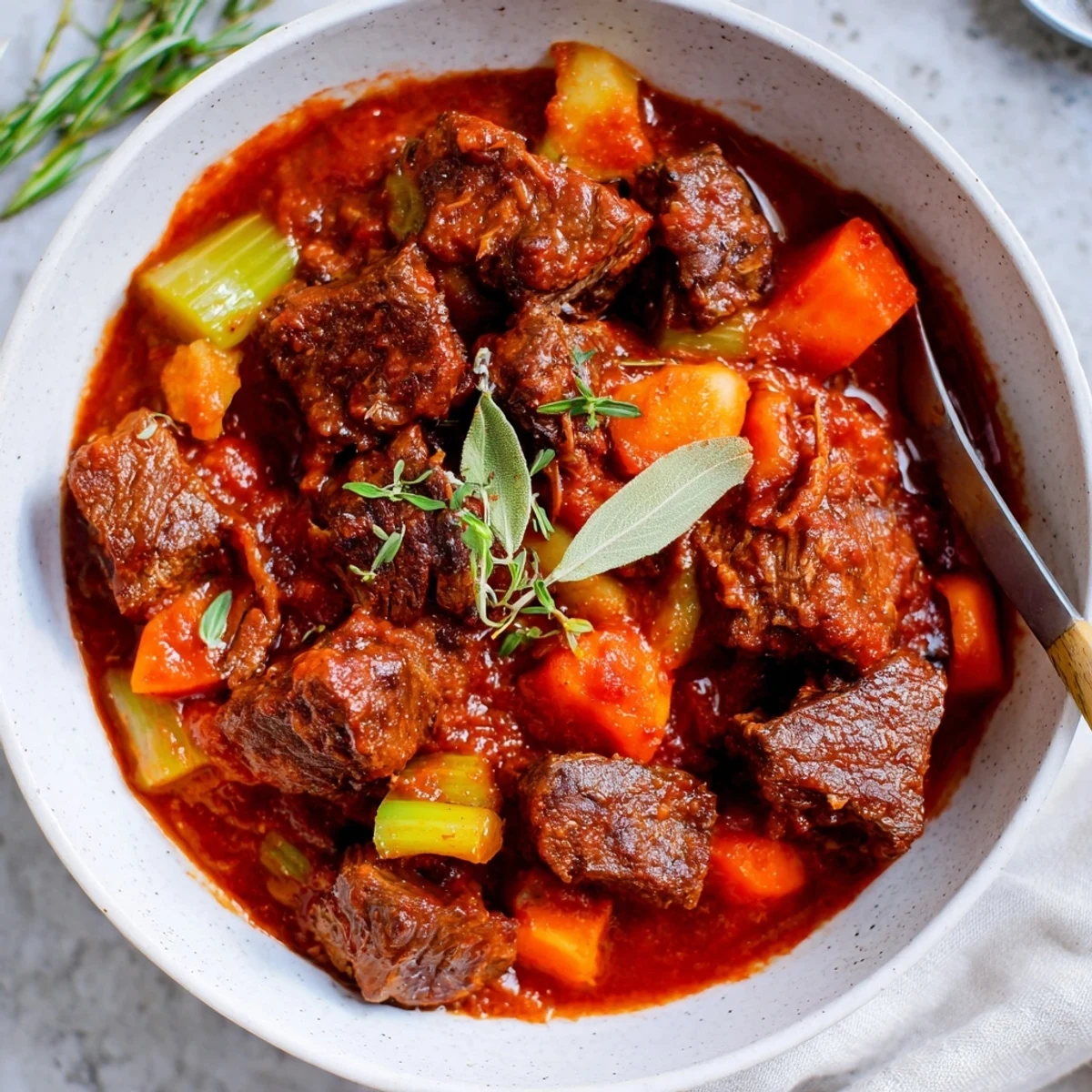
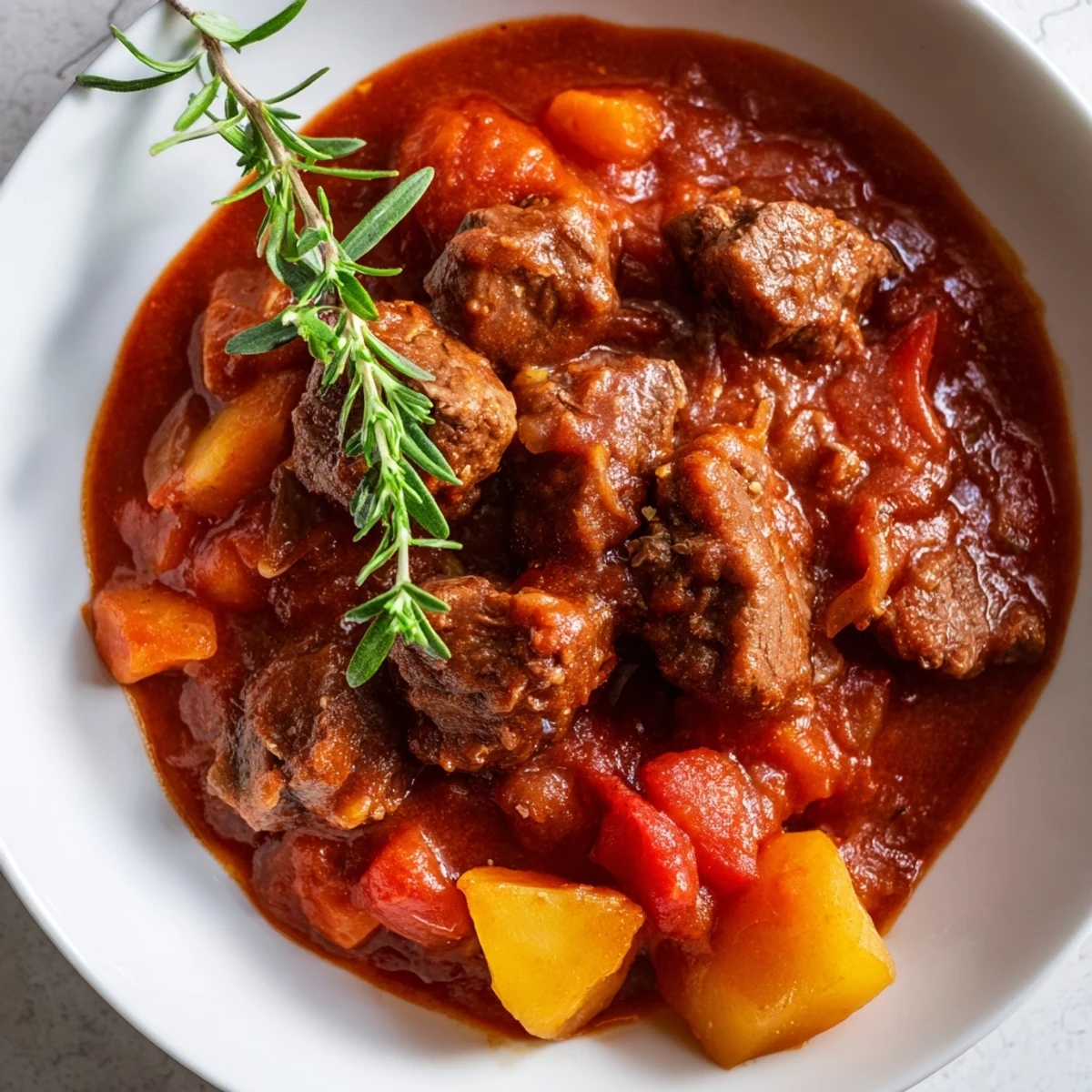
 Spezzatino di Manzo is a slow-braised Italian beef dish: cubes of beef browned, then simmered with onions, carrots, celery, tomatoes, red wine and fragrant thyme and rosemary until deeply flavored and tender. Potatoes are added near the end to finish the sauce. Remove herb stems before serving and pair with crusty bread or polenta; flavors deepen if made a day ahead.
The rain hammered against my kitchen window that November evening in Florence, and my landlady Signora Marta knocked on my door with a bowl of something that smelled like it had been simmering for days. One taste of her spezzatino and I was ruined for every other beef stew on earth. The meat fell apart under my fork, the sauce clung to everything it touched, and I sat there in my tiny rented room wondering how something so simple could taste like it was made by someone who had been cooking for a hundred years. I asked her for the recipe the next morning and she just laughed, handed me a glass of wine, and said I had to learn by doing.
I burned the first batch of beef badly because I crowded the pan and refused to wait my turn, a mistake Signora Marta probably saw coming from a mile away. The second attempt, cooked in my cramped kitchen with a wooden spoon in one hand and a glass of Chianti in the other, finally produced that deep mahogany sauce I had been chasing. My roommate walked in, took one sniff, and declared she was never leaving this apartment.
Ingredients
- Beef chuck (800 g, cubed): This cut has the right balance of fat and connective tissue that breaks down into melting tenderness over a long braise.
- Carrots (2 medium, sliced): They add natural sweetness that balances the acidity of the tomatoes and wine.
- Celery (2 stalks, chopped): A quiet backbone of flavor that you will miss if you skip it.
- Yellow onion (1 large, finely chopped): The foundation of every good Italian soffritto, so do not rush cooking it down.
- Potatoes (2 medium, cubed): Added later so they hold their shape while soaking up the rich sauce.
- Garlic (2 cloves, minced): Just enough to warm through without overpowering the herbs.
- Canned diced tomatoes (400 g): Use a good quality brand because this is where a lot of the sauce character comes from.
- Beef broth (500 ml): Homemade if you have it, but a good store bought version works beautifully here.
- Dry red wine (120 ml): Drink the rest of the bottle with dinner, because a stew should never be the only thing enjoying the wine.
- Tomato paste (2 tbsp): This concentrated hit of umami deepens the sauce color and rounds out the flavor.
- Extra virgin olive oil (2 tbsp): Use the good stuff for browning because it truly makes a difference you can taste.
- Bay leaves, thyme, and rosemary: These three herbs work together like an old Italian choir, each voice essential.
- Salt and black pepper: Season in layers throughout the cooking process, not just at the end.
Instructions
- Dry and season the beef:
- Pat the cubes thoroughly with paper towels until the surface is completely dry, then season generously with salt and pepper because wet meat will steam instead of brown.
- Sear in batches:
- Heat the olive oil in a heavy Dutch oven over medium high heat until it shimmers, then brown the beef in a single layer without touching it for at least three minutes per side until a deep crust forms. Resist the urge to move the pieces around and work in batches so each cube gets proper contact with the pan.
- Build the soffritto:
- In the same pot with all those beautiful browned bits still clinging to the bottom, add the onions, carrots, and celery with a pinch of salt and cook until everything is soft and fragrant. Toss in the garlic for just one minute until you can smell it bloom through the vegetables.
- Tomato paste and deglaze:
- Stir the tomato paste into the vegetables and let it cook for two minutes until it darkens slightly, then pour in the wine and scrape up every last bit of fond from the bottom of the pot. Let the wine reduce by half so the sharp alcohol smell cooks off and what remains is pure concentrated flavor.
- Bring it all together:
- Return the beef and any juices that collected on the plate back into the pot, then add the diced tomatoes, beef broth, bay leaves, thyme, and rosemary. Give everything a good stir, bring it to a gentle simmer, and cover it with a lid.
- Low and slow braise:
- Keep the heat as low as it will go and let the stew bubble lazily for about an hour and a half, stirring every twenty minutes or so to make sure nothing sticks. Your kitchen should smell incredible by now and you are perfectly justified in stealing a piece of beef to check on it.
- Add potatoes and finish:
- Tuck the potato cubes into the stew, taste the sauce and adjust the salt and pepper, then leave the lid off and cook for another thirty minutes until the potatoes are fork tender and the sauce has thickened into something that coats the back of a spoon. Remove the bay leaves and herb stems before serving.
 Pin to board
 There is something about a pot of spezzatino on the stove that turns a house into a home, and I think it has to do with the way the smell travels through every room and pulls people toward the kitchen without a single word being spoken. Signora Marta knew that, and now I know it too.
Serving Suggestions That Actually Work
Polenta is the classic match and for good reason because its creamy texture acts like a velvet pillow for the rich sauce, but a thick slice of toasted crusty bread will do the job just as well on a weeknight. I have also served it over buttered egg noodles when I wanted something a little more indulgent, and nobody complained.
Making It Your Own
Throw in a handful of fresh mushrooms or frozen peas during the last fifteen minutes if you want to stretch the stew or add more texture, and feel free to swap the beef chuck for veal if you find a good deal at the butcher. The technique stays the same no matter how you customize it.
Storage and Reheating
This stew keeps beautifully in the refrigerator for up to three days and the flavor genuinely improves overnight as the ingredients settle into each other. For freezing, portion it into airtight containers and it will hold for up to three months without losing any of its character.
- Let the stew cool completely before refrigerating to keep the texture intact.
- Reheat gently on the stovetop over low heat rather than using a microwave for the best texture.
- Always taste and adjust seasoning after reheating because cold storage can dull the salt slightly.
 Pin to board
 Some recipes become part of your rotation and some become part of your story, and this spezzatino is firmly in the second category for me. Make it once and you will understand why.
Recipe FAQs
- → What cut of beef works best?
-
Use well-marbled cuts like chuck or blade, cut into 2–3 cm cubes. The connective tissue breaks down during long, gentle simmering, yielding tender, flavorful meat.
- → Why brown the beef first?
-
Browning develops caramelized flavors and builds a deeper sauce. Brown in batches over medium-high heat to avoid steaming and to get a rich fond on the pot bottom.
- → How do I thicken the sauce naturally?
-
Allow the sauce to reduce uncovered after adding the potatoes, or gently mash a few potato cubes into the pot. A brief simmer will concentrate flavors without adding thickeners.
- → Can I adapt this for a slow cooker?
-
Yes. Brown the meat and sauté the vegetables first, then transfer to the slow cooker with tomatoes, broth and herbs. Cook on low for 6–8 hours, adding potatoes in the last hour.
- → What can I use instead of red wine?
-
Substitute an equal amount of beef broth with a splash of balsamic or red wine vinegar for acidity. Choose a full-bodied stock to preserve depth of flavor.
- → How should leftovers be stored and reheated?
-
Cool and refrigerate in an airtight container for up to 3 days. Reheat gently on the stove over low heat, adding a splash of broth if needed; flavors often improve after resting overnight.