
 Pin to board
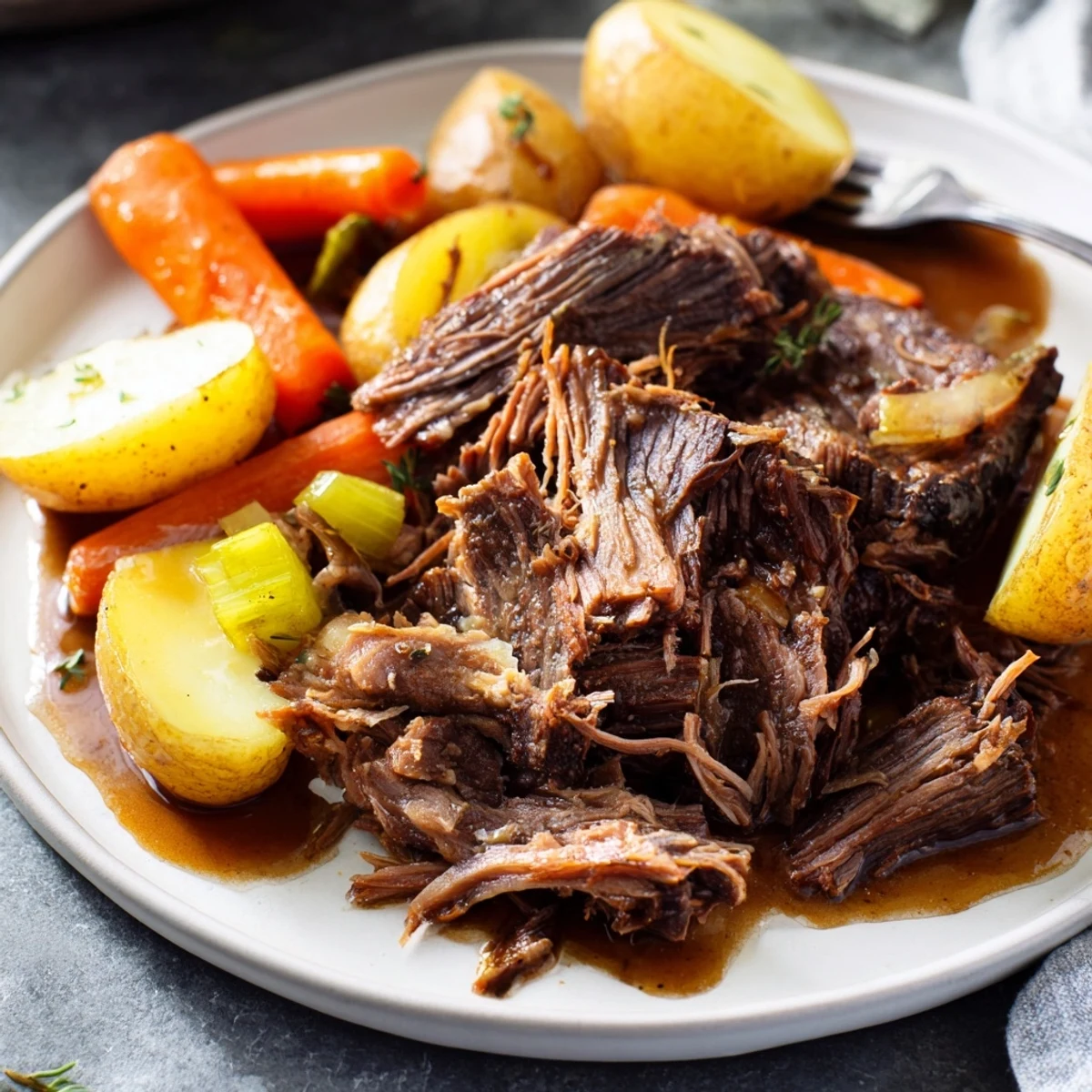
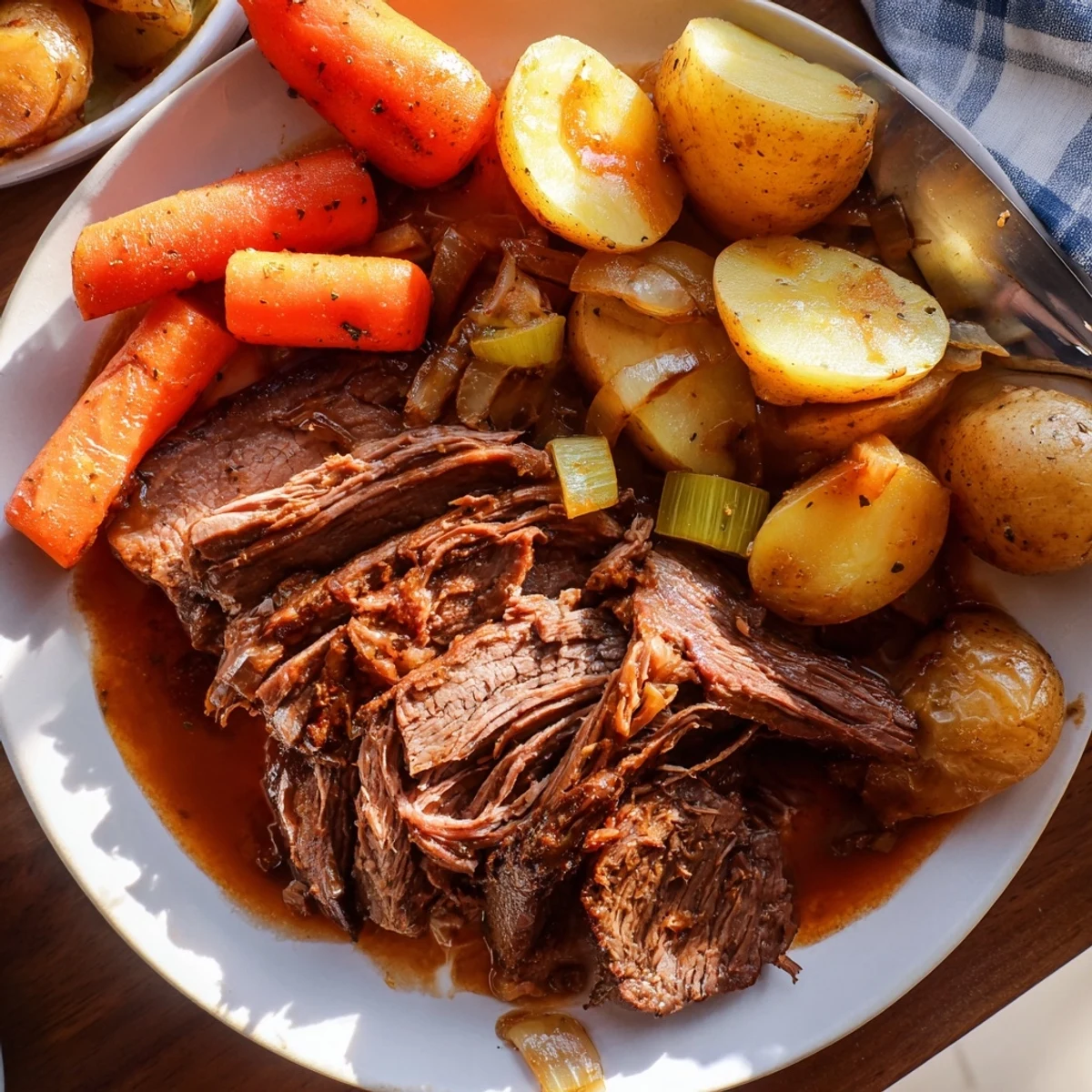
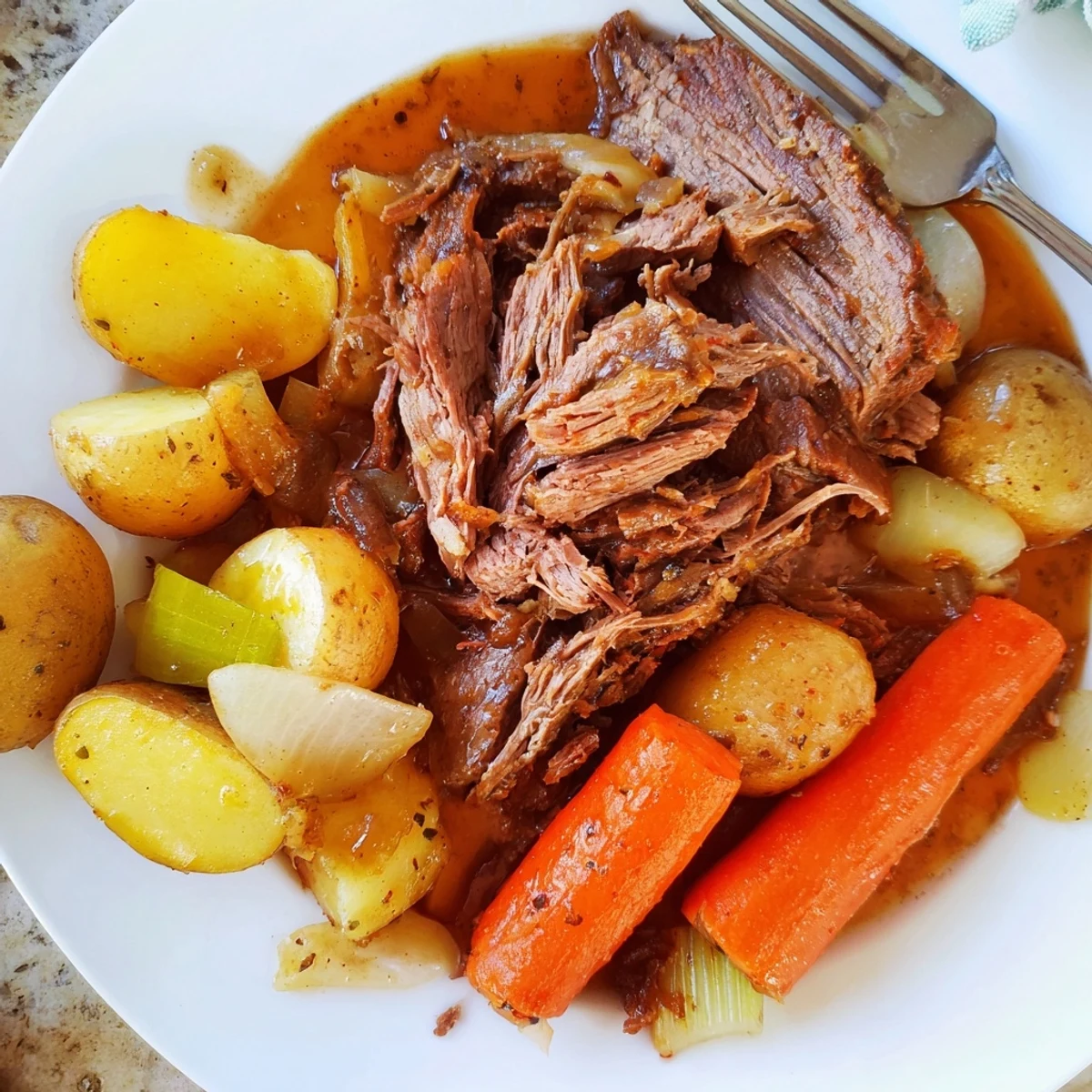
 This classic American pot roast features a well-seared beef chuck roast braised low and slow with carrots, Yukon gold potatoes, celery, and onions in a rich red wine and beef broth sauce.
Aromatic thyme, rosemary, and bay leaves infuse every bite with deep, savory flavor. After about 3 hours in the oven, the beef becomes fork-tender and practically melts in your mouth.
It yields 6 generous servings, making it ideal for Sunday family dinners or meal prepping for the week ahead.
The rain was hammering against the kitchen window the afternoon I decided a pot roast was the only reasonable response to the weather. Something about the hiss of oil in the Dutch oven and the way thyme smells when it hits warm liquid just resets everything. This recipe is the one I reach for when the world outside feels like too much and I need three hours of slow, deliberate comfort.
My neighbor Dave knocked on the door while this was in the oven, asking if something was burning, and ended up staying for dinner with his wife and two kids. That pot roast fed six people who had not planned on eating together, and somehow that made it taste better than any restaurant meal.
Ingredients
- 1 (3 to 4 lb) beef chuck roast: Chuck is the only cut that gets truly tender without drying out over a long braise, so do not be tempted to swap it for leaner meat.
- 3 large carrots, peeled and cut into 2 inch pieces: Thick chunks hold their shape through hours of cooking and soak up the broth beautifully.
- 4 medium Yukon gold potatoes, quartered: Yukon golds stay creamy inside without turning to mush, which russets unfortunately love to do.
- 2 celery stalks, cut into 2 inch pieces: Celery disappears into the sauce and gives it a savory depth most people cannot quite identify.
- 1 large yellow onion, sliced: The onion caramelizes on the bottom of the pot and creates a natural sweetness that balances the wine.
- 4 garlic cloves, smashed: Smashed rather than minced because you want gentle garlic flavor, not a sharp bite.
- 2 cups beef broth: Use gluten free broth if that matters to you, and always taste it first since some brands are aggressively salty.
- 1 cup dry red wine: A Cabernet or Merlot works wonders here, but you can swap in extra broth if wine is not your thing.
- 2 tablespoons tomato paste: This small amount adds richness and deep color without making anything taste like spaghetti sauce.
- 2 teaspoons kosher salt: Kosher salt distributes more evenly than table salt, and you need this much to penetrate a thick piece of meat.
- 1 teaspoon black pepper: Freshly cracked makes a real difference when it gets seared onto the surface of the beef.
- 1 teaspoon dried thyme: Thyme and beef are old friends, and even the dried version brings a woodsy warmth to the broth.
- 1 teaspoon dried rosemary: Crush it between your fingers before adding to wake up the oils.
- 2 bay leaves: Do not forget to fish these out before serving since nobody wants to bite into a leathery leaf.
- 2 tablespoons olive oil: Just enough to get a hard sear on the meat without the pot smoking up your kitchen.
Instructions
- Get the oven ready:
- Set your oven to 325 degrees Fahrenheit and move a rack to the lower middle position so the pot sits centered in the heat.
- Dry and season the roast:
- Pat the chuck roast thoroughly dry with paper towels because moisture is the enemy of a good sear. Sprinkle salt and pepper over every surface, pressing it in with your hands.
- Sear until deeply browned:
- Heat olive oil in a large Dutch oven over medium high heat until it shimmers, then lay the roast in and do not touch it for three to four minutes per side until you get a dark golden crust.
- Build the vegetable base:
- Remove the roast and toss in the onions, carrots, and celery, stirring for about five minutes until they soften and pick up the fond left behind. Add the garlic and tomato paste, stirring for one more minute until fragrant.
- Deglaze with wine:
- Pour in the red wine and scrape up every browned bit stuck to the bottom because that is where all the concentrated flavor lives. Let it bubble and reduce by half, about two to three minutes.
- Bring it all together:
- Nestle the roast back into the pot, scatter the potatoes, thyme, rosemary, and bay leaves around it, then pour in the broth until it reaches halfway up the sides of the meat.
- Slow braise in the oven:
- Cover with a tight lid, bring it to a quick simmer on the stovetop, then transfer the whole pot into the oven for two and a half to three hours until the roast yields completely to a fork.
- Rest and serve:
- Remove the pot from the oven, transfer the meat and vegetables to a platter, and discard the bay leaves. Skim excess fat from the pan juices, then slice or shred the beef and spoon everything generously with sauce.
 Pin to board
 The moment I lifted the lid and that cloud of herb scented steam hit my face, I understood why my grandmother always made pot roast on rainy Sundays. It is less about the food and more about the permission to slow down.
Making It Your Own
Toss in a handful of halved mushrooms or some peeled parsnips alongside the carrots for earthy sweetness that surprises people. I once added a quarter cup of balsamic vinegar on a whim and the sauce turned into something velvety and complex that had everyone scraping their plates.
Thickening the Sauce
If the pan juices feel too thin, set the Dutch oven back on the stove over medium heat and whisk in a slurry of one tablespoon cornstarch mixed with two tablespoons cold water. Let it bubble for two minutes and watch it transform into a glossy gravy that clings to the meat.
Tools That Make This Easier
A heavy Dutch oven with a tight fitting lid is honestly non negotiable here because it distributes heat evenly and traps moisture like nothing else. Good tongs for flipping the roast and a sturdy cutting board are the only other essentials you really need.
- A chef knife with some weight to it makes quick work of those root vegetables without wearing out your wrist.
- Check labels on broth and tomato paste for hidden gluten if that is a concern for anyone at your table.
- Pour yourself a glass of the same red wine you cooked with and call it kitchen logistics.
 Pin to board
 Some meals just anchor a day, and this pot roast has a way of turning an ordinary evening into something worth remembering. Share it with whoever happens to be nearby.
Recipe FAQs
- → What cut of beef works best for pot roast?
-
Beef chuck roast is the ideal choice because its marbling and connective tissue break down during slow cooking, resulting in tender, flavorful meat. Brisket or round roast can also work well.
- → Can I make pot roast without red wine?
-
Absolutely. Simply substitute the wine with an equal amount of additional beef broth. The dish will still develop rich, deep flavors from the tomato paste, herbs, and long braising time.
- → How do I know when the pot roast is done?
-
The roast is ready when it is fork-tender, meaning a fork slides in and out of the meat with almost no resistance. This typically takes 2.5 to 3 hours at 325°F. The internal temperature should reach around 200°F for optimal tenderness.
- → Can I prepare pot roast in a slow cooker instead of the oven?
-
Yes. After searing the meat and sautéing the vegetables on the stovetop, transfer everything to a slow cooker. Cook on low for 8 to 10 hours or on high for 4 to 5 hours until the beef is fork-tender.
- → How should I store and reheat leftover pot roast?
-
Store leftover pot roast with its juices in an airtight container in the refrigerator for up to 4 days. Reheat gently in a covered pot over low heat on the stove or in the oven at 300°F until warmed through. The leftovers often taste even better the next day.
- → How can I thicken the pan juices into a gravy?
-
After removing the roast and vegetables, simmer the pan juices on the stovetop and whisk in a slurry made from 1 tablespoon cornstarch mixed with 2 tablespoons cold water. Stir until the sauce reaches your desired consistency.