
 Pin to board
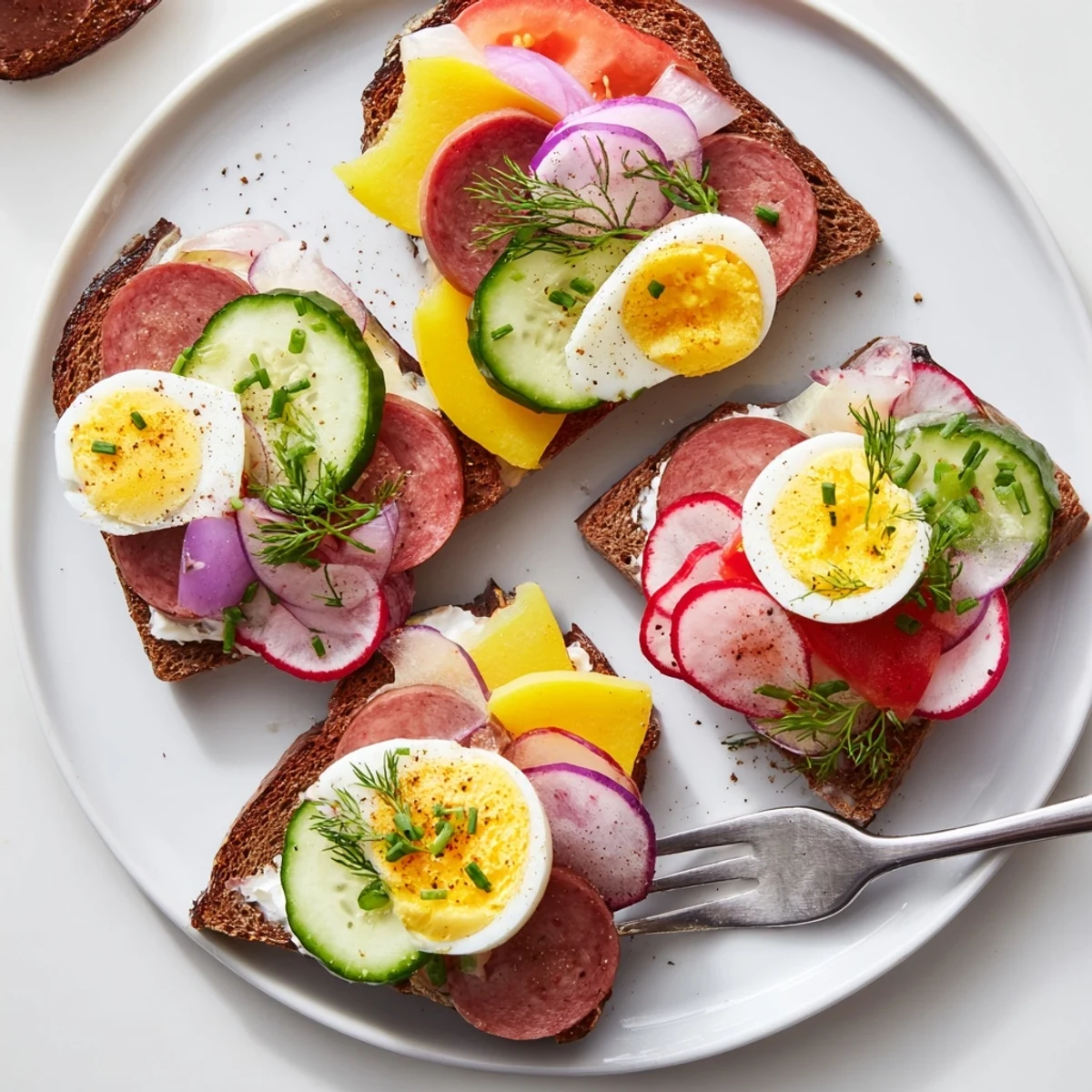
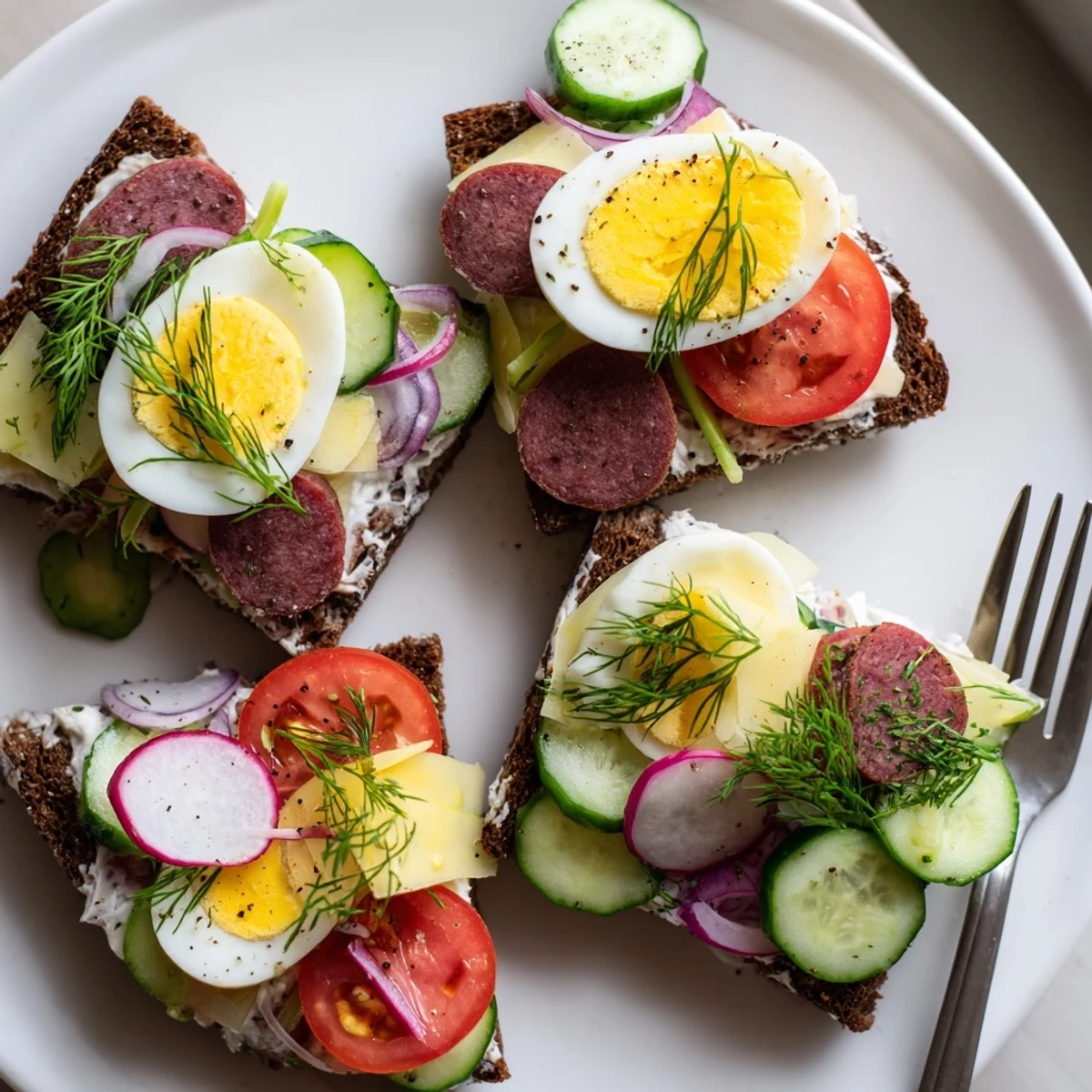
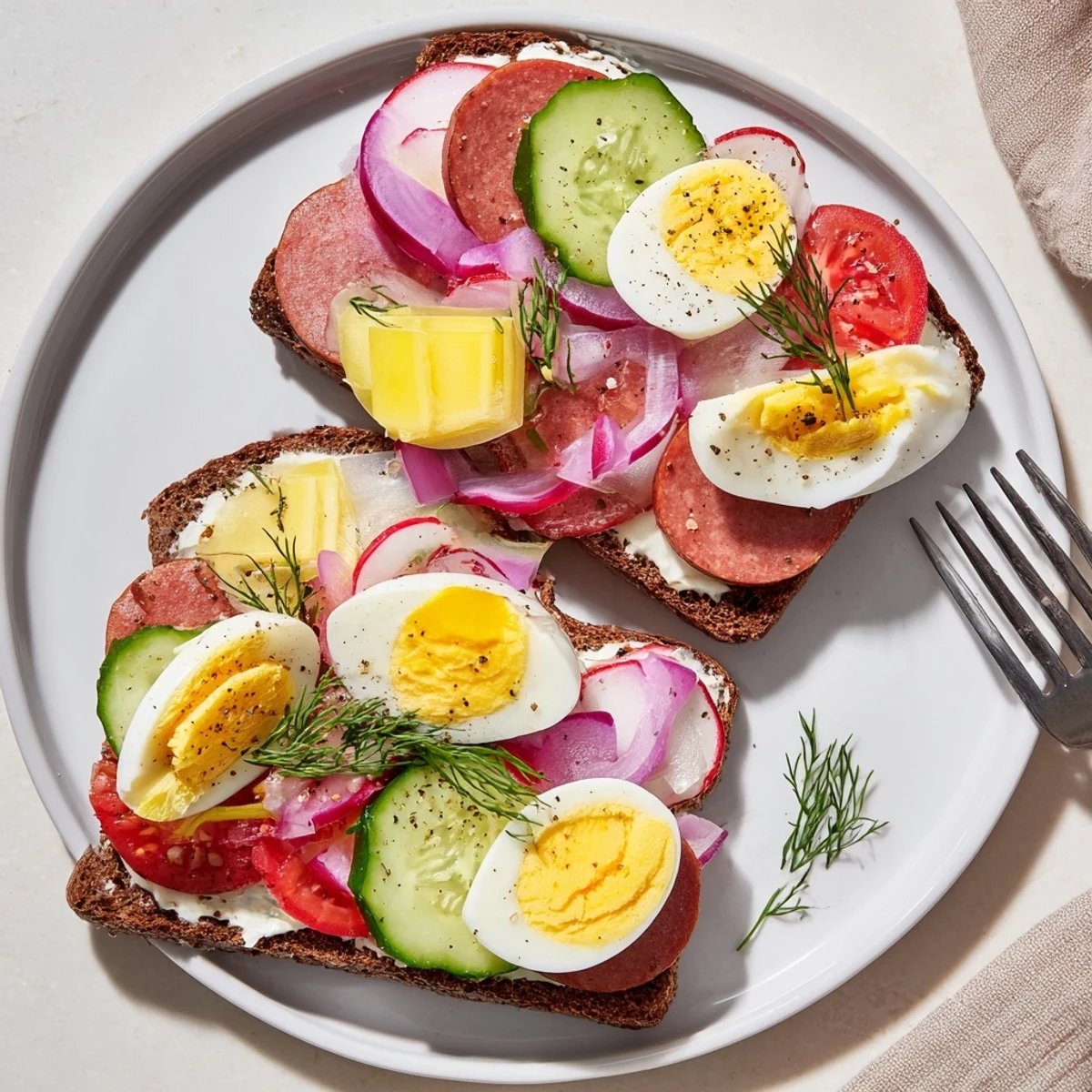
 Polish kanapki are vibrant open-faced sandwiches built on slices of sturdy rye bread or baguette, layered with butter or cream cheese, then topped with a variety of proteins like kielbasa, smoked ham, or hard-boiled egg.
Each sandwich gets finished with slices of tomato, cucumber, radish, and red onion, then sprinkled with fresh chives or dill and a crack of black pepper. They come together in just 15 minutes with no cooking required, making them ideal for casual entertaining, quick lunches, or a spread at your next gathering.
The sound of a knife clicking against a wooden board on a Saturday morning in my grandmothers kitchen is permanently lodged somewhere deep in my brain. She never measured anything, never wrote anything down, just piled whatever looked good onto thick slices of rye and called it breakfast. These open faced Polish sandwiches, or kanapki, are less a recipe and more a philosophy about gathering around whatever you have and making it beautiful.
Every New Years Eve my family would line up an entire table of these, each one topped differently, and guests would hover over them all night grazing between glasses of champagne and loudly debated card games.
Ingredients
- Rye bread or baguette (8 slices): Dense, sour rye is traditional and holds up beautifully under heavy toppings without collapsing into a soggy mess.
- Unsalted butter, softened (3 tbsp): Real butter is non negotiable here, it creates a moisture barrier between bread and toppings that saves everything.
- Cream cheese (2 tbsp, optional): A schmear alongside or instead of butter adds a pleasant tang, especially on vegetarian versions.
- Kielbasa or smoked ham (4 slices): Good quality smoked sausage makes all the difference, look for ones with visible garlic and marbling.
- Cooked egg (4 slices): Hard boiled egg slices add a mild creaminess that ties salty and fresh elements together.
- Yellow cheese like Edam or Gouda (4 slices): A mild cheese lets the stronger flavors shine while adding a smooth layer of richness.
- Tomato (1, thinly sliced): Use a sharp knife and ripe but firm tomatoes so each slice holds its shape.
- Cucumber (1 small, thinly sliced): Persian or English cucumbers work best because you can skip peeling and seeding.
- Red onion (1/4, thinly sliced): Soak the slices in ice water for five minutes if you want to tame the sharp bite.
- Radishes (8, thinly sliced): These bring a peppery crunch that cuts through rich meats and cheeses perfectly.
- Fresh chives or dill, chopped: Fresh herbs are the finishing touch that make these taste Polish instead of just thrown together.
- Salt and freshly ground black pepper: Season generously right before serving so the vegetables still have their snap.
Instructions
- Prep your canvas:
- Lay all eight bread slices on a clean cutting board or work surface and give them a moment to breathe if they were refrigerated.
- Spread the foundation:
- Using a butter knife, spread softened butter or cream cheese edge to edge on each slice, making sure to cover the corners.
- Layer your proteins and cheeses:
- Arrange kielbasa, ham, egg slices, or cheese on each piece, mixing and matching so your platter has variety and visual appeal.
- Add the fresh crunch:
- Layer on tomato, cucumber, red onion, and radish slices, letting some of them overlap for a rustic, abundant look.
- Finish with herbs and seasoning:
- Sprinkle chopped chives or dill across the top, add salt and pepper to taste, and step back to admire your work before anyone grabs one.
- Serve immediately:
- Arrange on a platter or wooden board and watch them disappear, because kanapki wait for no one.
 Pin to board
 My grandmother never served these on regular plates, always on a big round board in the center of the table, and somehow that made everyone reach for one more than they planned to.
Bread Makes or Breaks This
After years of making kanapki with whatever bread I had around, I can tell you that a dense, seed studded rye from an actual bakery elevates these from snack to something people remember. Supermarket rye that is too soft and cakey will compress under toppings and fall apart in your hands halfway through eating. Day old bread actually works better than fresh because it stands firm and the slight staleness disappears under rich butter and toppings.
Endless Ways to Mix and Match
There are no rules about what belongs on a kanapka, which is exactly the point of them. Some of my favorite combinations include egg slices with radish and dill, kielbasa with pickle and mustard, or just cucumber and cream cheese when I want something light. Horseradish smeared under ham will clear your sinuses in the best way possible.
Serving and Pairing Ideas
A cold lager or a cup of strong black tea are the traditional companions, but honestly these work with almost anything poured alongside them. Arrange them on a wooden cutting board with a few cornichons scattered around and you have a meal that looks like it took effort when it really took fifteen minutes.
- Set out small bowls of extra toppings so guests can customize their own.
- Make double what you think you need because they vanish shockingly fast.
- Always season with salt and pepper at the very last second to keep vegetables crisp.
 Pin to board
 Kanapki are proof that the simplest food, made with care and good ingredients, always wins. Set them out, pour something cold, and let the table do the rest.
Recipe FAQs
- → What type of bread works best for kanapki?
-
Dense, sturdy breads like rye, pumpernickel, or a crusty baguette hold up best under the toppings without becoming soggy. Avoid soft sandwich bread, as it lacks the structure needed for open-faced preparations.
- → Can I prepare the toppings ahead of time?
-
Yes, you can slice the vegetables, cheeses, and meats a few hours in advance and store them in airtight containers in the refrigerator. Assemble the kanapki just before serving to keep the bread from softening.
- → What are traditional Polish toppings for kanapki?
-
Classic toppings include kielbasa, smoked ham, hard-boiled egg slices, yellow cheeses like Edam or Gouda, pickled cucumbers, fresh radishes, tomatoes, and herbs such as dill or chives. Butter is the most traditional spread.
- → Are kanapki served warm or cold?
-
Kanapki are typically served at room temperature or chilled. Since there is no cooking involved, they are assembled and served immediately, making them a convenient make-ahead option for parties and buffets.
- → How do I keep the bread from getting soggy?
-
Spread a generous layer of butter or cream cheese on the bread first to create a moisture barrier. Add juicier toppings like tomato slices just before serving, and avoid letting assembled sandwiches sit for extended periods.
- → Can I make kanapki vegetarian?
-
Absolutely. Simply skip the kielbasa and ham, and load up on hard-boiled egg slices, cheese, and extra vegetables like cucumber, radish, tomato, and red onion. They are equally satisfying without meat.