
 Pin to board
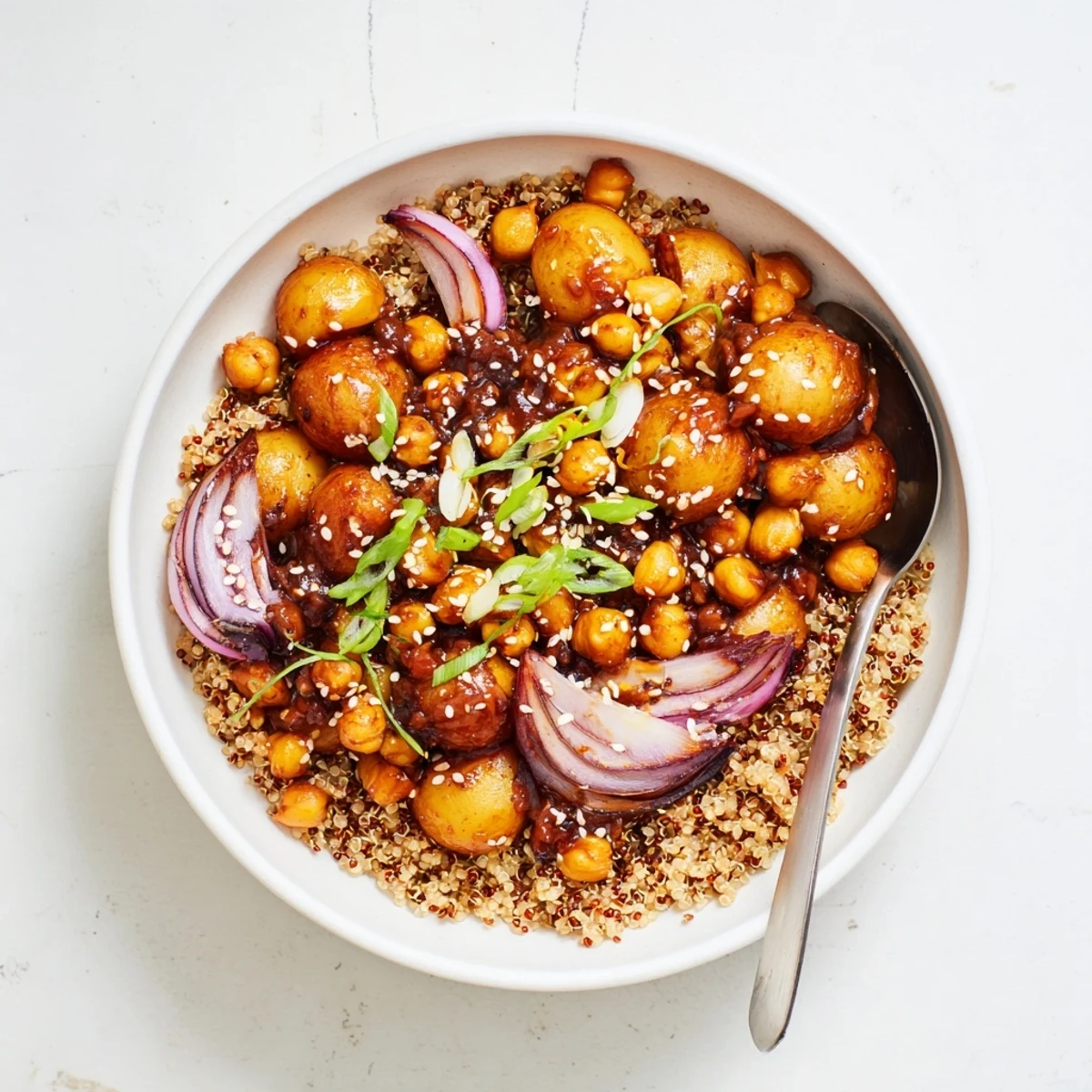
 This vibrant bowl features crispy roasted baby potatoes and golden chickpeas, all coated in a homemade spicy gochujang glaze. The Korean-inspired sauce combines fermented chili paste with soy sauce, sesame oil, rice vinegar, and just a touch of maple syrup for perfect balance.
Everything gets served over fluffy quinoa, creating a complete protein-packed meal that's naturally vegan and gluten-free. The contrast between the crunchy exterior of the roasted vegetables and the tender, fluffy grain makes each bite satisfying.
Ready in under an hour with mostly hands-off cooking, this dish works equally well for meal prep or weeknight dinners. The bold flavors improve overnight, making it an excellent option for make-ahead lunches.
The first time gochujang entered my kitchen, I accidentally used double what the recipe called for and spent the next twenty minutes drinking milk straight from the carton. My roommate at the time watched me with equal parts amusement and concern, then suggested we just keep going and see what happened. That night became legendary in our apartment building, and now I understand exactly how much heat brings out the deep, fermented sweetness without overwhelming everything else.
Last winter, when my sister came over complaining about another failed attempt at meal prep, I put a bowl of this in front of her without saying anything. She took one bite, stopped mid-sentence about her terrible day, and asked if I could teach her how to make it right then. We spent the next hour making double batches while her terrible day completely evaporated from the conversation.
Ingredients
- Baby potatoes (500 g, halved): These hold their shape better than larger potatoes and get these irresistible crispy edges when roasted.
- Chickpeas (1 can, drained and rinsed): They become nutty and slightly crunchy in the oven, adding protein and texture that soaks up the sauce beautifully.
- Quinoa (200 g, rinsed): Rinse it thoroughly until the water runs clear or youll end up with bitter quinoa, which I learned the disappointing way.
- Gochujang (3 tbsp): This Korean chili paste is the soul of the dish, bringing heat and deep fermented flavor that makes everything taste restaurant-quality.
- Red onion (1 small, sliced): It mellows and sweetens as it cooks, providing a nice contrast to the spicy sauce.
Instructions
- Get your oven working first:
- Preheat to 220°C and line a baking tray with parchment paper to save yourself from scrubbing burnt sauce later.
- Roast the potatoes and chickpeas:
- Toss them with olive oil, salt, pepper, and minced garlic on the prepared tray, then roast for 25 to 30 minutes, stirring halfway through, until the potatoes are crispy and the chickpeas are golden.
- Cook the quinoa while everything roasts:
- Combine the rinsed quinoa with 2 cups of water in a saucepan, bring to a boil, then reduce heat, cover, and simmer for about 15 minutes until the water is absorbed.
- Whisk together the sauce:
- Mix gochujang, soy sauce, sesame oil, rice vinegar, maple syrup, and water in a small bowl until completely smooth.
- Bring it all together:
- Sauté the sliced red onion in a large skillet for 2 to 3 minutes, add the roasted potatoes and chickpeas, pour in the sauce, and toss everything until coated and heated through.
- Assemble your bowls:
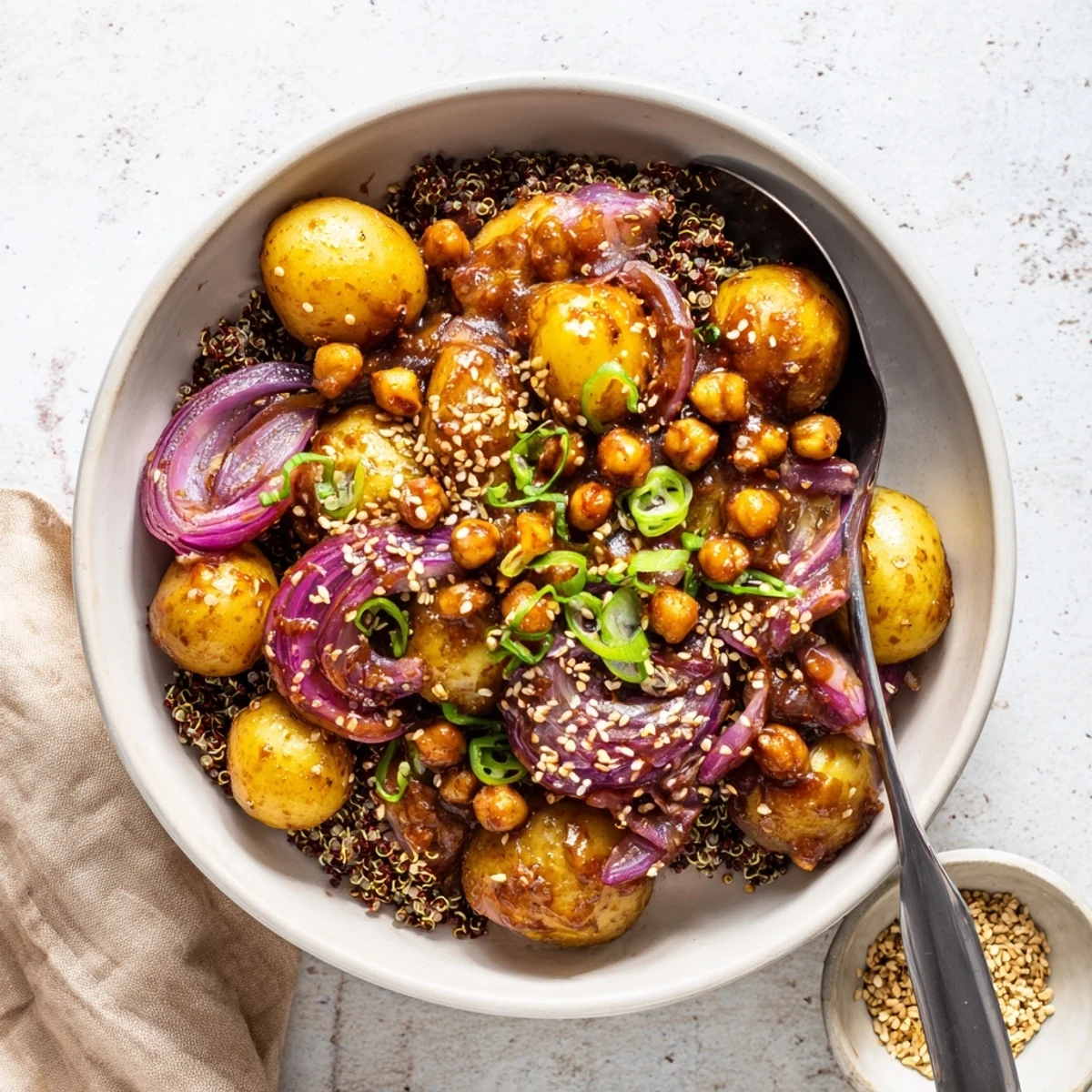
- Divide the quinoa among bowls, top with the glazed mixture, and sprinkle with sesame seeds and sliced spring onions.
 Pin to board
 My partner, who usually claims they dont like spicy food, now requests this weekly and has started suggesting increasingly bold variations. Watching someone who previously avoided chili paste now enthusiastically drizzle extra sauce over their bowl has been one of those quiet kitchen victories I cherish.
Making It Your Own
Add steamed broccoli or spinach directly to the bowl if you want more greens without cooking another dish. The sauce works just as well on roasted vegetables as it does on the potatoes, making it incredibly flexible for whatever you have in the refrigerator.
Protein Swaps
Crispy tofu cubes or roasted cauliflower work beautifully in place of chickpeas if you need a different protein profile or texture. Just adjust roasting time accordingly and toss them in the sauce just before serving.
Make Ahead Magic
The roasted components and quinoa keep well in separate containers for up to four days, making this perfect for meal prep. Reheat everything in a skillet with a splash of water to refresh the sauce.
- Store extra sauce in a small jar in the refrigerator for up to two weeks.
- If the quinoa seems dry after reheating, fluff it with a fork and add a teaspoon of water.
- Double the sauce recipe if you like extra-spicy bowls throughout the week.
 Pin to board
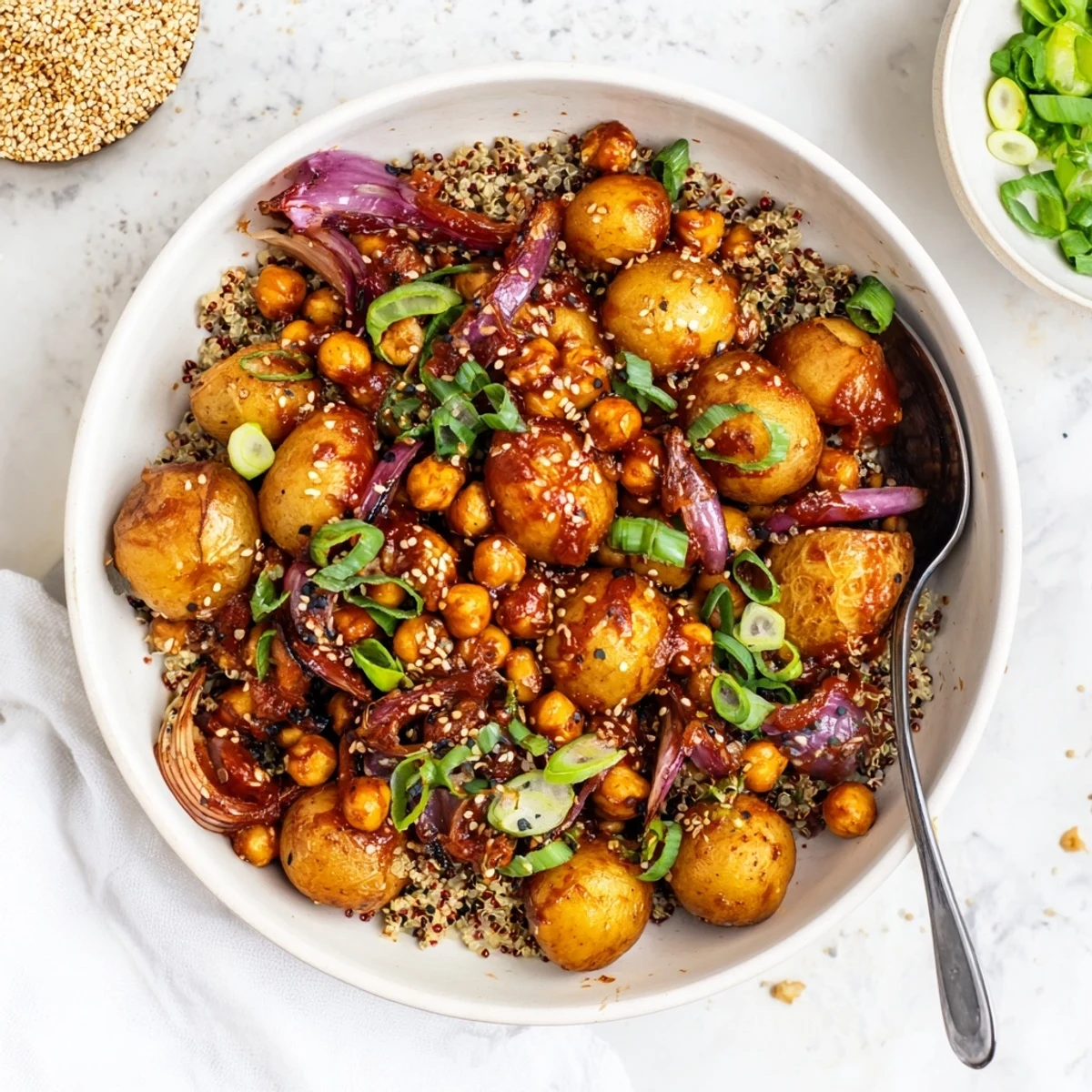
 Theres something deeply satisfying about a bowl that looks this vibrant and tastes even better, especially when it comes together so easily. This recipe has become my go-to for feeding friends who insist they dont like vegan food, right up until they ask for seconds.
Recipe FAQs
- → Can I make this bowl less spicy?
-
Absolutely. Start with 1 tablespoon of gochujang instead of 3, then taste and adjust. The sauce is easy to customize—add more maple syrup to balance heat, or incorporate coconut milk for a creamier, milder version.
- → What can I use instead of quinoa?
-
Brown rice, farro, or even cauliflower rice work beautifully here. For a grain-free option, serve the glazed vegetables over roasted sweet potato cubes or steamed bok choy.
- → Is gochujang gluten-free?
-
Traditional gochujang often contains wheat. Look for specifically labeled gluten-free versions, or substitute with a mixture of red pepper flakes, miso paste, and a touch of soy sauce.
- → Can I prepare components ahead?
-
Yes. Roast the vegetables and cook the quinoa up to 3 days in advance. Store separately in airtight containers. Reheat the vegetables in a skillet before tossing with fresh sauce for best texture.
- → How do I add more protein?
-
Top with pan-seared tofu, edamame, or a soft-boiled egg. For additional plant-based protein, stir in hemp seeds or nutritional yeast when serving.