
 Pin to board
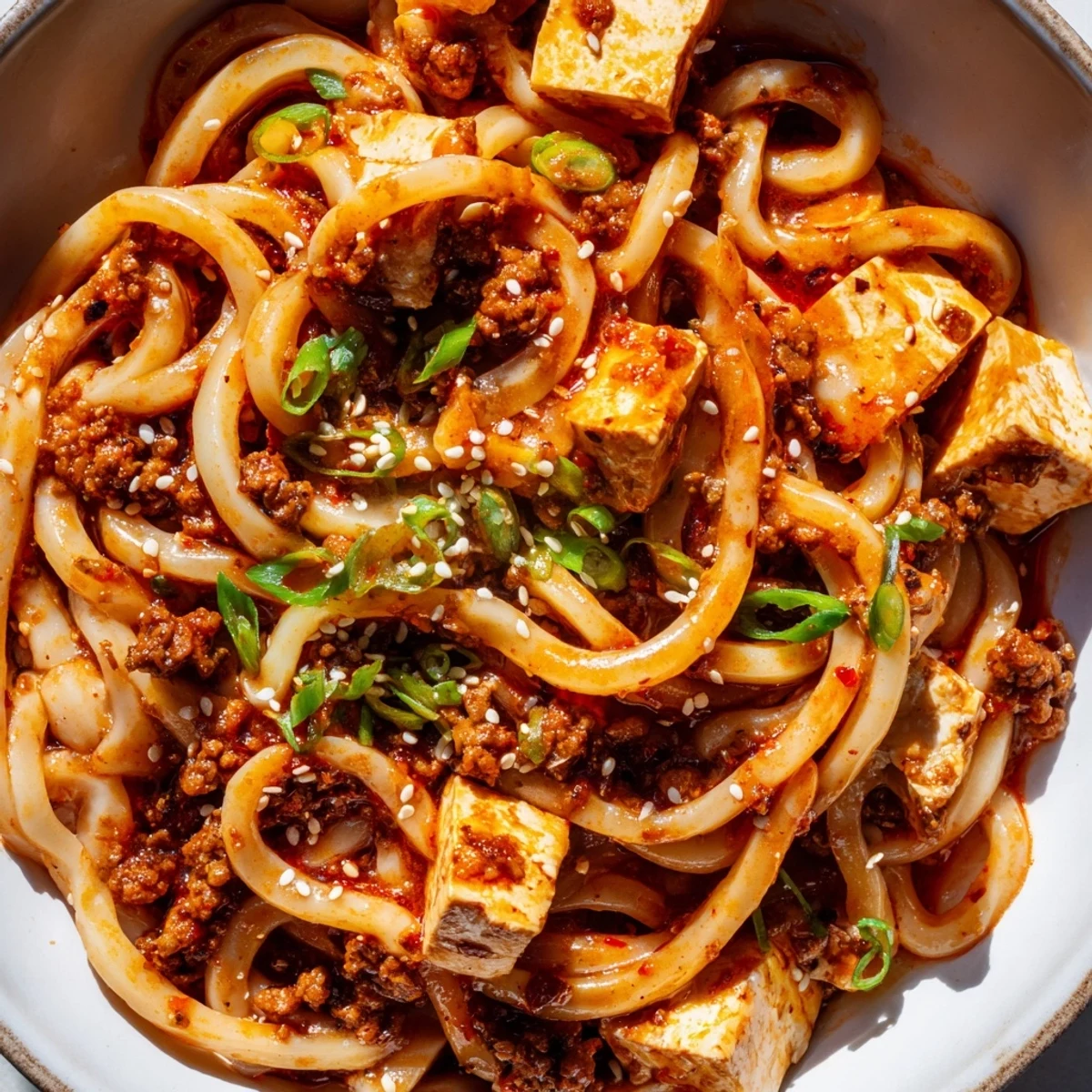
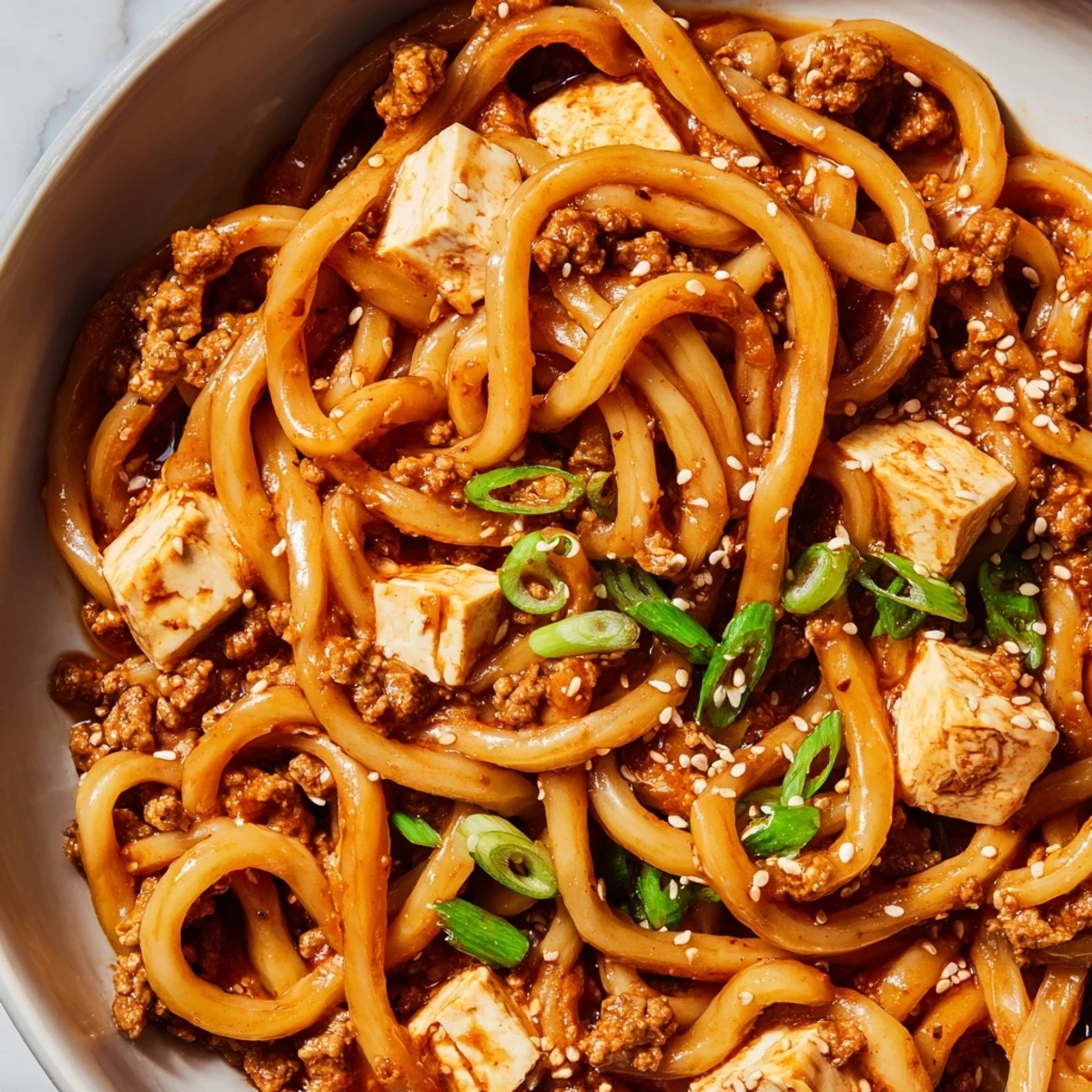
 This fusion bowl combines the bold, numbing heat of Sichuan mapo tofu with the satisfying chew of Japanese udon noodles. Soft tofu cubes simmer in a rich, spicy sauce with ground pork, fermented chili bean paste, and aromatic aromatics. The thickened sauce clings perfectly to each udon strand, creating a comforting dish that balances heat, savoriness, and texture. Ready in just 35 minutes, it's an ideal weeknight dinner that brings restaurant-quality flavors to your home kitchen.
The rain was coming down hard when I first decided to combine my two favorite comfort foods. I had leftover udon from Tuesday and was craving mapo tofu, but too tired to decide between them. The kitchen smelled incredible within minutes of the first sizzle, and my roommate wandered in asking what magic was happening. Now this fusion lives in my regular dinner rotation.
Last winter during finals week, my friend Sarah stumbled into my apartment looking defeated. One bowl of this later, she was sitting cross-legged on my kitchen floor, actually smiling between spicy mouthfuls. We ate in comfortable silence while the snow fell outside. Sometimes food just hits different when you need it most.
Ingredients
- Soft tofu: Silken or soft tofu holds up better than firm in this sauce, gently absorbing all those bold flavors without falling apart
- Ground pork or plant-based mince: The protein that grounds the dish, breaking into savory crumbles that carry the spice throughout every bite
- Fresh udon noodles: Thick and chewy with a satisfying bounce, these are the perfect vessel for clinging onto that luscious sauce
- Sichuan peppercorns: Toasting these first releases their signature numbing compound, creating that distinctive ma la sensation
- Doubanjiang: The fermented chili bean paste is the heart of mapo tofu, bringing deep umami and a beautiful red color to the sauce
Instructions
- Toast the peppercorns:
- Heat oil in your wok over medium heat and add crushed Sichuan peppercorns, letting them sizzle for 30 seconds until their floral aroma fills the air
- Build your aromatics:
- Toss in garlic, minced ginger, and the white parts of your spring onions, stirring constantly for about a minute until everything smells incredible
- Brown the protein:
- Crank up the heat to medium-high and add your ground pork or plant-based mince, breaking it apart with your spatula until it is nicely browned throughout
- Awaken the doubanjiang:
- Stir in the fermented bean paste and let it cook for a minute or two, watching as the oil turns a gorgeous deep red
- Create the sauce base:
- Pour in soy sauce, oyster sauce, Shaoxing wine, and sugar, mixing everything together until the pork is evenly coated
- Simmer the tofu:
- Gently lower in your cubed tofu and pour in the broth, letting it simmer for five minutes while occasionally spooning sauce over the top
- Thicken to perfection:
- Stir in your cornstarch slurry and let the sauce bubble for another two to three minutes until it coats the back of a spoon
- Cook the noodles:
- While the sauce thickens, boil your udon according to package directions, drain well, and divide them among waiting bowls
- Bring it all together:
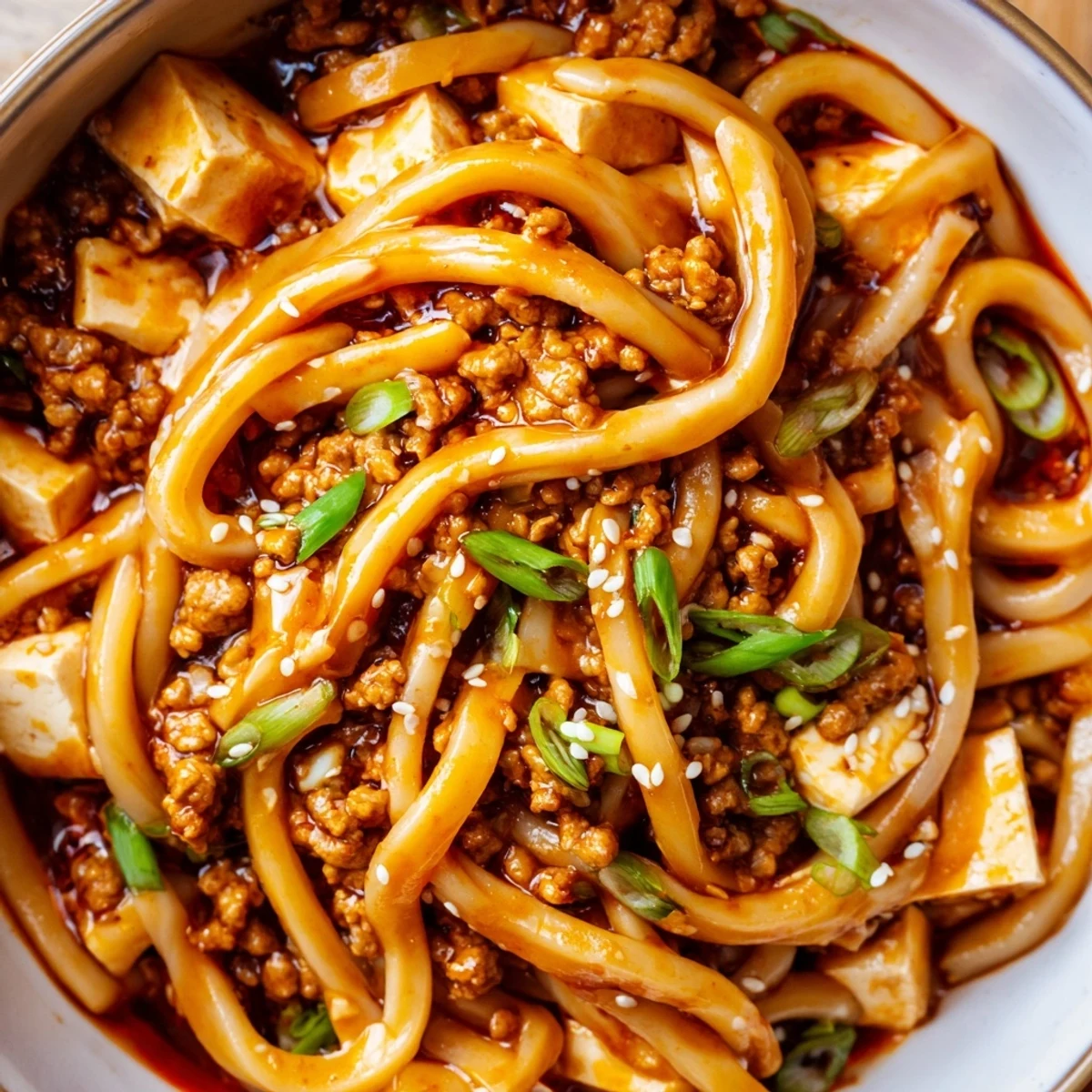
- Ladle generous portions of that spicy, numbing mapo tofu over the noodles and finish with green onions, sesame seeds, and a drizzle of chili oil
 Pin to board
 My grandmother would never approve of mixing cuisines like this, but I think she would have loved the taste anyway. There is something joyous about breaking rules in the kitchen, especially when the result makes people this happy.
Making It Your Own
I have found that adding a splash of rice vinegar at the end cuts through the richness beautifully. The acid brightens everything without competing with the spice profile. Sometimes I throw in baby bok choy during the last few minutes of simmering for some welcome crunch.
Perfecting The Noodle Game
Reserve a splash of the noodle cooking water before draining, it is starchy magic if your sauce needs loosening. I also toss the cooked udon with a teaspoon of sesame oil immediately after draining to prevent sticking. The nutty aroma becomes another layer of flavor.
Serving Secrets
This dish demands to be eaten piping hot, so have your bowls ready and guests at the table before you start plating. The contrast between the hot sauce and cool toppings is part of the experience.
- Place a small bowl of extra doubanjiang on the table for spice lovers to customize
- Cold cucumber slices on the side provide relief for those sensitive to heat
- A cold lager or light sake cuts through the spice and richness perfectly
 Pin to board
 Comfort food does not need to follow traditional rules to be satisfying. Sometimes the best discoveries happen when you are too hungry to overthink things.
Recipe FAQs
- → What makes mapo tofu udon different from traditional mapo tofu?
-
Instead of serving over steamed rice, this version pairs the spicy tofu with thick, chewy udon noodles. The noodles absorb the flavorful sauce while maintaining their springy texture, creating a more substantial and satisfying bowl.
- → Can I make this vegetarian or vegan?
-
Absolutely. Substitute ground pork with plant-based mince and swap oyster sauce for mushroom sauce. Use vegetable broth instead of chicken broth. The spicy, savory flavors remain just as delicious.
- → How spicy is this dish?
-
The heat level is medium to spicy, coming from doubanjiang (fermented chili bean paste) and optional Sichuan peppercorns. You can adjust the spice by reducing the doubanjiang or omitting the chili oil garnish.
- → What type of tofu works best?
-
Soft or silken tofu is ideal because it absorbs the sauce beautifully and has a delicate texture that contrasts with the chewy noodles. Handle gently when adding to the sauce to prevent breaking.
- → Can I prepare components ahead?
-
You can prep ingredients in advance and store them separately. The sauce thickens beautifully when reheated, but cook the udon noodles fresh for the best texture. Leftovers keep well for 2-3 days in the refrigerator.