
 Pin to board
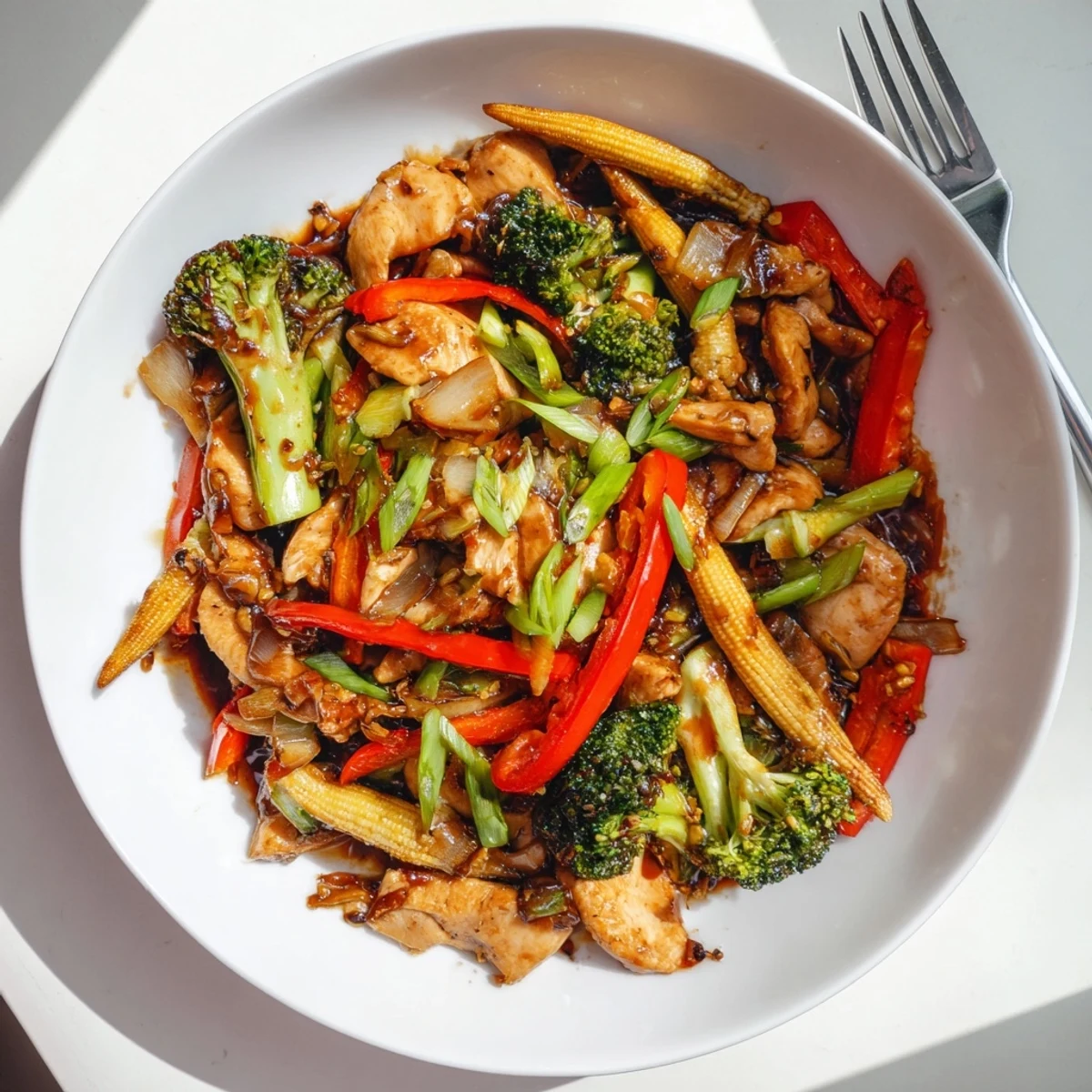
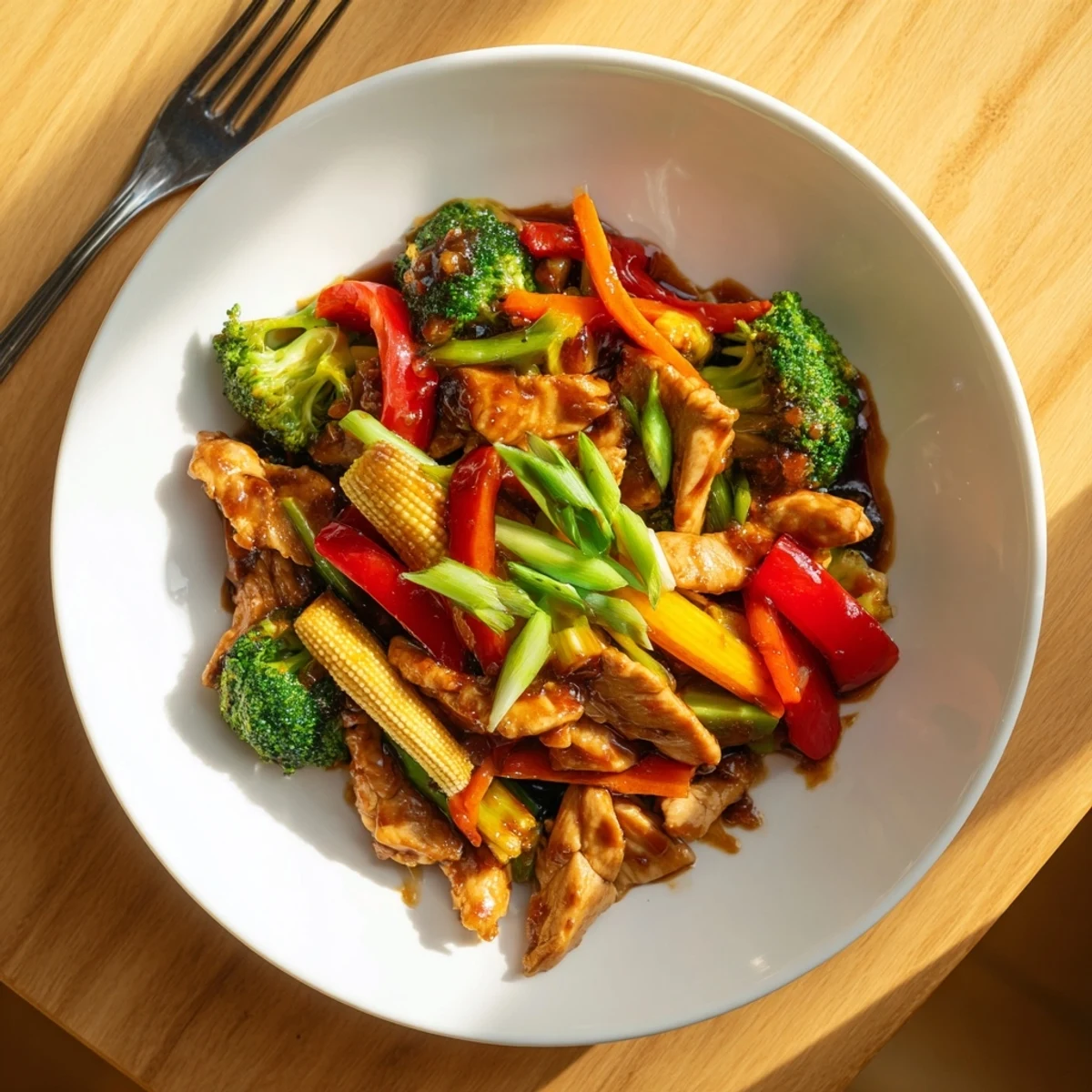
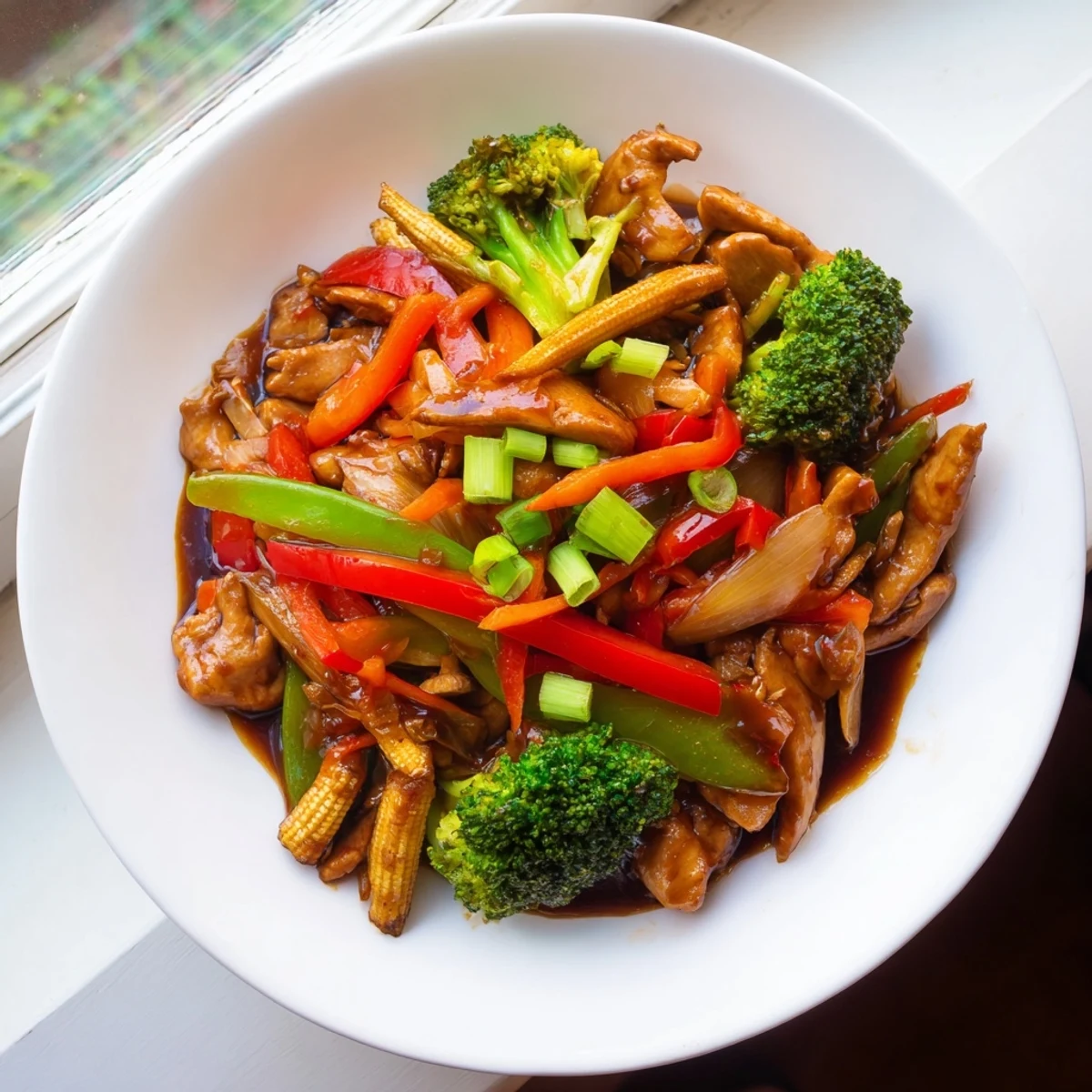
 This Hunan chicken brings together thinly sliced, marinated chicken breast wok-tossed with vibrant broccoli, bell peppers, carrots, and baby corn. The star is the bold Hunan-style sauce — a balanced blend of chili bean paste, soy sauce, oyster sauce, and rice vinegar that coats every piece with a glossy, spicy-savory glaze.
Marinating the chicken in soy sauce, Shaoxing wine, and cornstarch ensures tender, flavorful meat that cooks quickly over high heat. The entire dish comes together in about 35 minutes, making it perfect for a weeknight dinner served over steamed rice.
With medium heat and layers of garlic, ginger, and scallions, this dish delivers the authentic, aromatic punch that Hunan cuisine is celebrated for.
The sizzle of chicken hitting a screaming hot wok is one of those sounds that makes everyone in the house wander toward the kitchen. My neighbor actually knocked on my door once asking what I was cooking because the aroma of chili bean paste and ginger had drifted through the shared hallway. That was the night Hunan Chicken earned its permanent spot in my weeknight rotation.
I started making this when my wok was still shiny and new and I was terrified of high heat cooking. Now I crave that controlled chaos of tossing vegetables in a smoking pan, the clatter of metal against steel, and the way the sauce caramelizes into something magical right at the end.
Ingredients
- 500 g boneless skinless chicken breast thinly sliced: Slice against the grain on a slight bias for the most tender bites.
- 1 tbsp soy sauce plus 1 tbsp Shaoxing wine plus 1 tsp cornstarch plus 1/2 tsp sesame oil for the marinade: This quick soak locks in moisture and gives the chicken that silky texture you get at restaurants.
- 1 cup broccoli florets: Cut into bite sized pieces so they cook through without losing their bright color.
- 1 red bell pepper and 1 green bell pepper sliced: The two colors are not just pretty, they add slightly different sweetness levels.
- 1 cup carrot thinly sliced: Thin coins cook evenly and add a gentle sweetness that balances the heat.
- 8 baby corn halved: These bring a satisfying crunch and absorb the sauce beautifully.
- 2 cloves garlic minced plus 1 inch piece ginger minced: Fresh is non negotiable here, the aroma is half the experience.
- 2 spring onions sliced: Save these for the very end so they stay fresh and vibrant.
- 2 tbsp soy sauce plus 1 tbsp oyster sauce plus 1 tbsp chili bean paste plus 1 tbsp rice vinegar plus 1 tbsp hoisin sauce plus 1 tsp sugar plus 2 tbsp water for the sauce: Doubanjiang is the soul of this dish, it delivers that signature Hunan heat and depth.
- 2 tbsp vegetable oil: Use a neutral oil with a high smoke point like peanut or canola.
Instructions
- Marinate the chicken:
- Toss the sliced chicken with soy sauce, Shaoxing wine, cornstarch, and sesame oil in a bowl until every piece is evenly coated. Let it sit for 10 to 15 minutes while you prep everything else.
- Mix the sauce:
- Whisk all sauce ingredients together in a small bowl until the sugar dissolves. Give it a taste and imagine how much bolder it will be after hitting the hot wok.
- Sear the chicken:
- Heat 1 tbsp oil in your wok over high heat until it shimmers, then spread the chicken in a single layer and let it sear without stirring for a minute. Stir fry for 3 to 4 minutes total until just cooked through, then transfer to a plate.
- Stir fry the aromatics and vegetables:
- Add the remaining oil to the wok, then toss in the garlic and ginger for about 15 seconds until fragrant. Add all the vegetables and stir fry for 3 to 5 minutes, keeping them moving so they blister but stay crisp tender.
- Bring it all together:
- Return the chicken to the wok, pour in the sauce, and toss everything vigorously for 2 to 3 minutes. The sauce will thicken and turn glossy as it coats each piece.
- Finish and serve:
- Stir in the spring onions, taste for salt and heat, and serve immediately over steamed rice while everything is piping hot.
 Pin to board
 The first time I served this to friends, we ended up standing around the kitchen island eating straight from the wok with forks because nobody wanted to wait for plates.
Wok Wisdom
A wok makes a real difference here but a large cast iron skillet works in a pinch. The key is surface area and high heat, you want a sear not a steam. If your wok is seasoned properly nothing sticks and the faint smoky flavor it develops is irreplaceable.
Adjusting the Heat
Doubanjiang varies wildly between brands, some are mild and funky while others will clear your sinuses. Taste yours plain before adding the full tablespoon so you know what you are working with. You can always add more chili flakes at the end but you cannot take the fire away once it is there.
Leftovers and Reheating
This reheats surprisingly well if you keep the sauce and vegetables separate from the rice. A quick toss in a hot pan brings back that fresh cooked texture better than the microwave ever could.
- Store leftovers in an airtight container in the fridge for up to 3 days.
- Chicken thighs are a great swap if you prefer darker, juicier meat.
- Remember to let the wok scream hot before adding oil or you will steam instead of sear.
 Pin to board
 Some dishes you follow a recipe for and some you cook because they make the kitchen feel alive. Hunan Chicken is both, and it deserves a regular spot on your table.
Recipe FAQs
- → What makes Hunan chicken different from Szechuan chicken?
-
Hunan cuisine emphasizes fresh chili peppers and bold, straightforward heat with savory and tangy notes. Szechuan cooking relies on Sichuan peppercorns that create a numbing sensation alongside the spice. Hunan flavors tend to be sharper and more direct, while Szechuan dishes are known for their signature mala (numbing-spicy) profile.
- → Can I use chicken thighs instead of breast?
-
Absolutely. Boneless, skinless chicken thighs work wonderfully and actually stay juicier during the high-heat stir-frying process. Slice them thinly just like you would breast meat, and follow the same marinating steps. The slightly higher fat content in thighs adds richness to the finished dish.
- → What is chili bean paste (Doubanjiang) and can I substitute it?
-
Doubanjiang is a fermented chili bean paste that provides deep, savory umami and moderate heat. It's a staple in Chinese cooking. If you can't find it, a mix of gochujang (Korean chili paste) with a splash of soy sauce works as a substitute, though the flavor profile will shift slightly. Sriracha blended with a touch of miso paste can also work in a pinch.
- → How do I get the best stir-fry results at home?
-
The key is high heat and preparation. Have all ingredients chopped, sauces mixed, and chicken marinated before you start cooking. Use a wok or large skillet and don't overcrowd the pan — cook in batches if needed. Keep the ingredients moving constantly, and add the sauce at the end so everything gets coated without steaming.
- → How should I store and reheat leftovers?
-
Store cooled leftovers in an airtight container in the refrigerator for up to 3 days. To reheat, use a skillet or wok over medium-high heat with a splash of water to loosen the sauce and restore the glossy coating. Avoid microwaving if possible, as it can make the vegetables mushy and the chicken rubbery.
- → Is this dish very spicy?
-
The heat level is moderate, coming primarily from the doubanjiang (chili bean paste). You can easily adjust the spice by adding dried chili flakes or fresh sliced chilies to increase the heat, or by reducing the amount of doubanjiang for a milder version. The rice vinegar and sugar in the sauce help balance the overall heat.