
 Pin to board
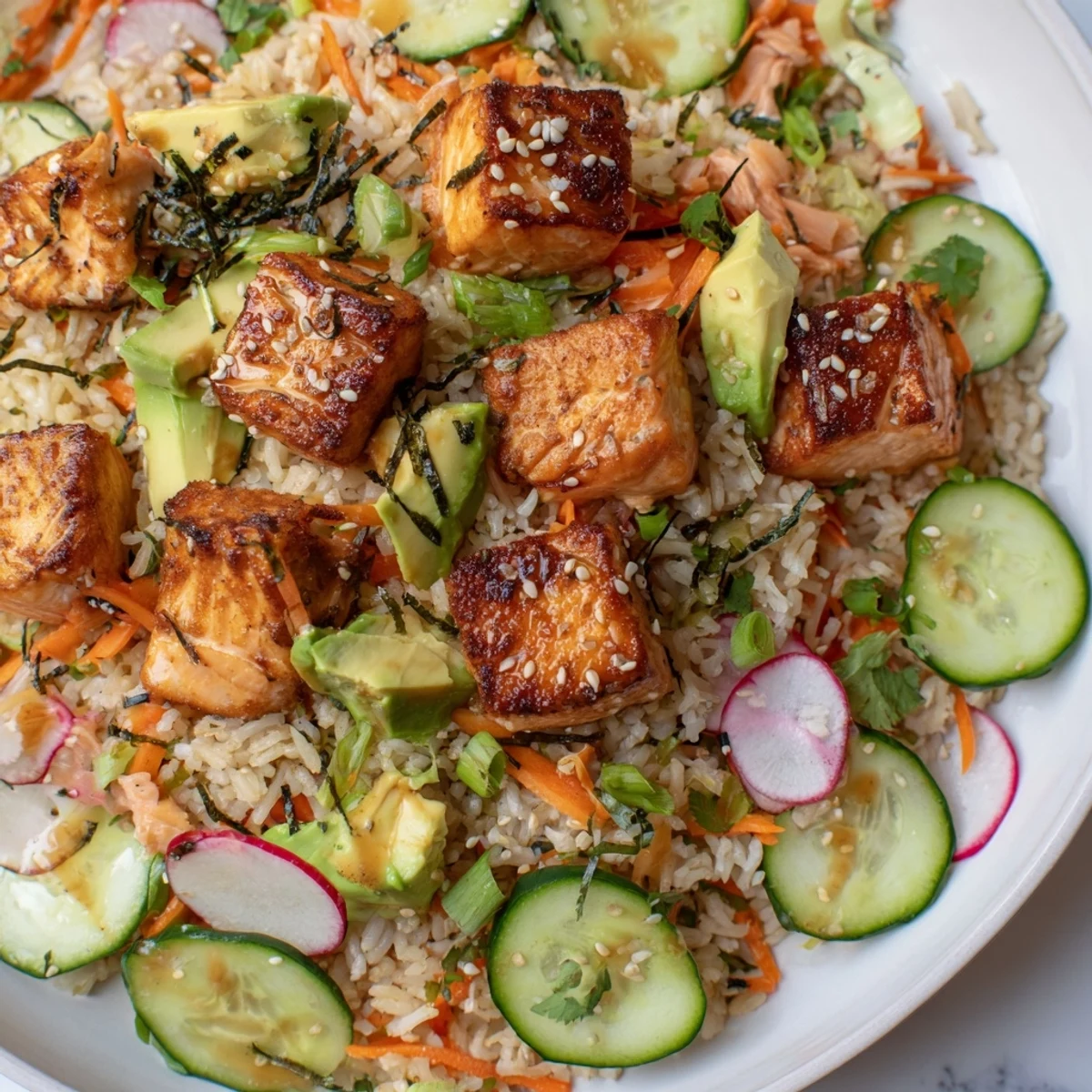
 This vibrant Asian-inspired dish pairs golden, pan-seared salmon cubes with fluffy jasmine rice and a rainbow of fresh vegetables including cucumber, radish, carrot, and avocado.
The star of the plate is the homemade ginger-sesame dressing — a bright blend of rice vinegar, freshly grated ginger, soy sauce, and a touch of honey that brings every element together.
Cornstarch-dusted salmon achieves maximum crispiness in the skillet, creating a satisfying contrast against the cool, crisp vegetables and tender rice.
The sizzle of salmon hitting a hot pan is one of those sounds that makes everyone in the house wander into the kitchen, asking what is for dinner. This crispy salmon rice salad came together one Tuesday when I had leftover rice and a fillet that needed cooking, and it turned into something I now crave weekly. The ginger dressing pulls everything together with a tangy heat that wakes up every bite. It is fresh, filling, and somehow feels both indulgent and light at the same time.
I brought this to a friends potluck last summer and watched three people go back for seconds before I even got a plate. One friend stood over the bowl picking at the leftover crispy salmon bits with her fingers, which honestly is the highest compliment a dish can receive.
Ingredients
- 500 g skin-on salmon fillet: Skin-on holds together better during pan frying and gives you that satisfying crunch on the outside.
- 1 tbsp soy sauce plus 1 tbsp sesame oil plus 1 tsp black pepper: This quick marinade penetrates fast, so even a short toss makes a difference.
- 1 tbsp cornstarch: The secret weapon for that shatteringly crisp exterior on every salmon cube.
- 2 cups cooked jasmine or sushi rice, cooled: Day-old rice works best because it separates nicely and absorbs the dressing without turning mushy.
- 1 small cucumber, thinly sliced: Adds a cool crunch that balances the rich salmon.
- 1 carrot, julienned: Thin strips mean every forkful gets a bit of sweetness.
- 4 radishes, thinly sliced: Their peppery bite cuts through the richness beautifully.
- 2 scallions, sliced: A mild onion freshness scattered on top.
- 1 avocado, diced: Creaminess that ties the whole bowl together.
- 2 tbsp fresh cilantro or mint, chopped: Pick based on your mood, both work but mint leans more refreshing.
- 3 tbsp rice vinegar: The acidic backbone of the dressing.
- 1 tbsp grated fresh ginger: Grate it fine so the flavor distributes evenly without stringy bits.
- 2 tbsp soy sauce for dressing: Adds depth and salt that rounds out the vinegar.
- 2 tsp honey or maple syrup: Just enough sweetness to tame the ginger heat.
- 2 tbsp toasted sesame oil: This is where the nutty aroma comes from, do not skip it.
- 1 garlic clove, minced: One is enough here since ginger is the star.
- 1 tsp lime juice: A final bright note that lifts everything.
- 1 tbsp toasted sesame seeds: Texture and visual appeal in one sprinkle.
- Nori strips or furikake: Totally optional but they add a savory hit that makes the whole thing sing.
Instructions
- Crisp up the salmon:
- Pat the salmon completely dry and cut it into 2 cm cubes. Toss gently with soy sauce, sesame oil, and black pepper, then dust with cornstarch until every piece is lightly coated.
- Pan fry to golden perfection:
- Heat oil in a nonstick skillet over medium high heat and place the salmon skin side down. Cook 3 to 4 minutes per side until deeply golden and the skin crackles when you tap it.
- Prep the vegetables:
- While the salmon works its magic, slice the cucumber, julienne the carrot, cut the radishes thin, and dice the avocado. Scatter the herbs last so they stay vibrant.
- Whisk the ginger dressing:
- Combine rice vinegar, grated ginger, soy sauce, honey, sesame oil, garlic, and lime juice in a bowl and whisk until the honey dissolves and everything looks unified. Taste it and adjust if you want more ginger kick.
- Build the bowl:
- Spread cooled rice across a large shallow bowl or platter. Arrange all the vegetables artfully on top, then place the crispy salmon pieces over everything while they are still hot and crackling.
- Dress and garnish:
- Drizzle the ginger dressing generously over the entire bowl. Finish with sesame seeds, chopped herbs, and nori strips or furikake if you are using them, then serve immediately.
 Pin to board
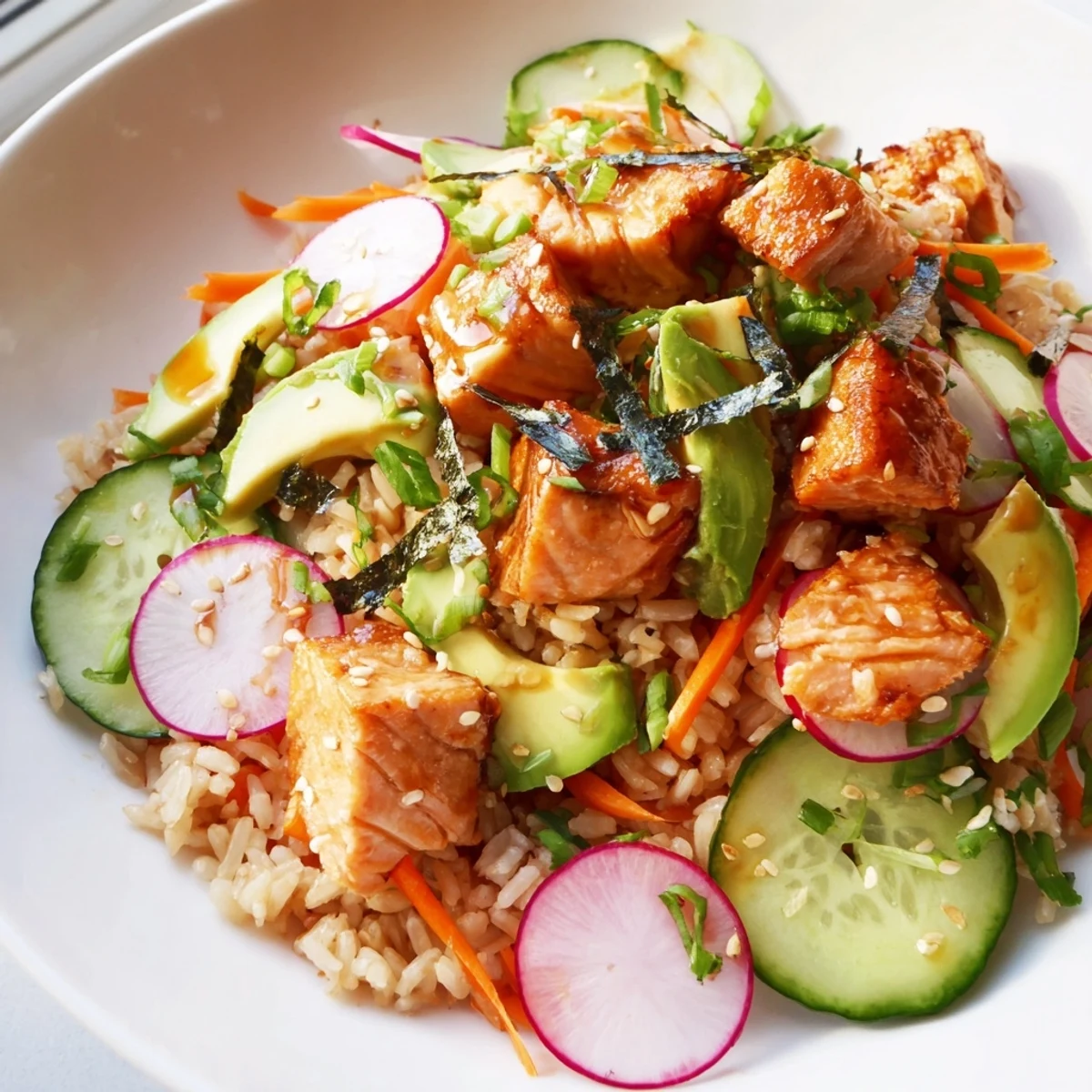
 There is something about arranging food in a wide shallow bowl that makes the whole meal feel like an event rather than just dinner. I started doing this after eating at a tiny Japanese cafe where everything came in beautiful wide dishes, and now I cannot go back to regular plates for salads like this.
Making It Your Own
Swap the salmon for crispy tofu cubes and you have a completely plant based dinner that still hits all the same textures. You can also turn leftover rice into pan fried rice patties, crisp them up in the same skillet, and build the salad on top for an extra crunchy base. My partner adds a drizzle of sriracha over everything, which I secretly love even though I pretend it is not necessary.
Getting the Crispiest Salmon
The cornstarch coating is non negotiable if you want that shattery crust, but the real trick is making sure the salmon is bone dry before you start. I press it between paper towels for a full minute, then let it air dry on the cutting board while I prep everything else. The pan needs to be hot enough that the oil shimmers, and you should hear an aggressive sizzle the moment the fish touches the surface.
Serving and Storing
This dish is at its absolute best the moment the salmon comes out of the pan, so try to time your assembly so everything else is ready before the fish finishes cooking. Leftovers keep well in the fridge for one day, though the salmon will lose its crunch. Store the dressing separately if you plan to eat half now and half later.
- Keep the ginger dressing in a jar in the fridge for up to a week and shake before using.
- Reheat leftover salmon in a dry skillet over medium heat to bring back some of the crispness.
- Never microwave the salmon if you want to preserve any texture at all.
 Pin to board
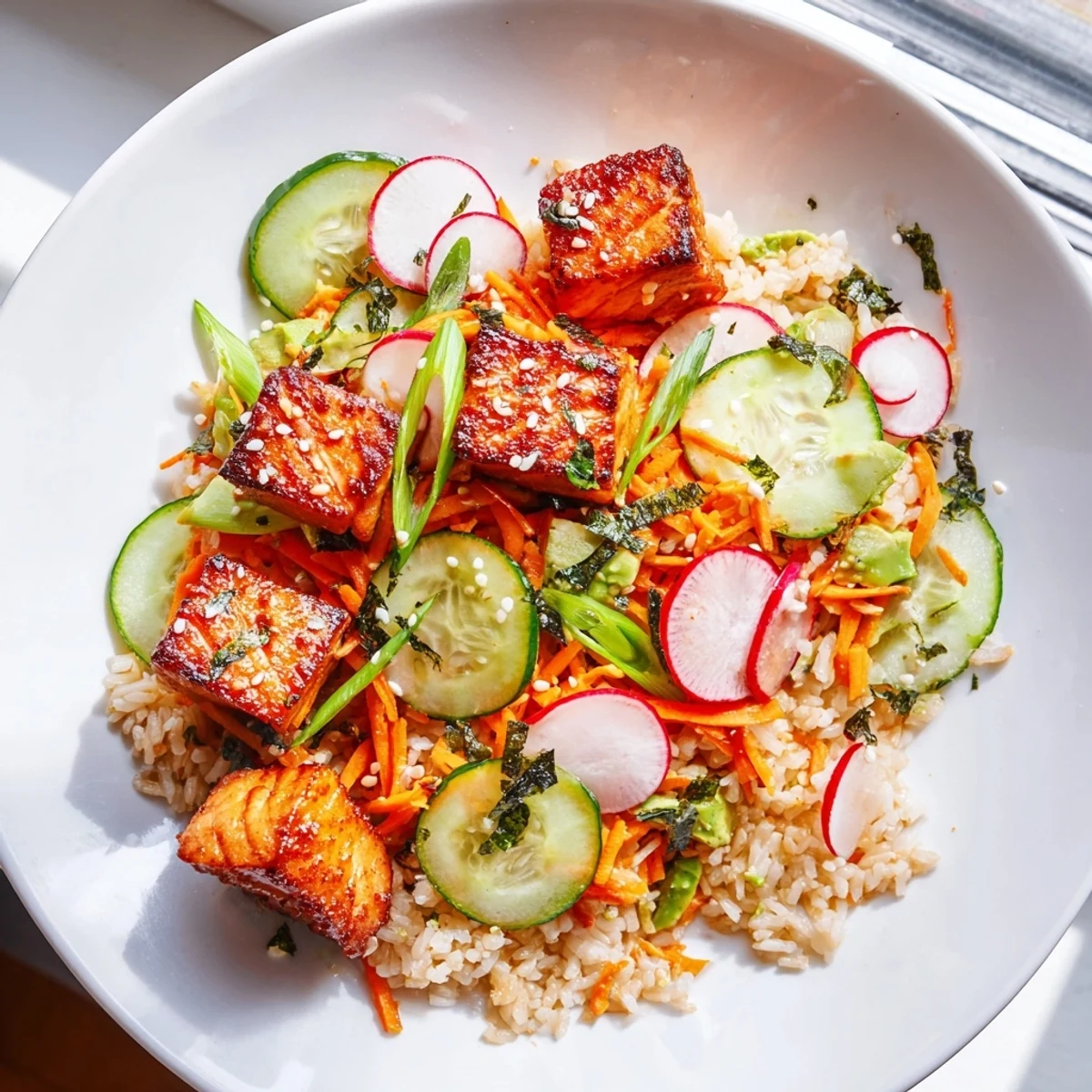
 Some dinners are about sustenance and some are about joy, and this bowl manages to be both without any extra effort. Make it once and it will become part of your regular rotation before the week is out.
Recipe FAQs
- → How do I get the salmon extra crispy?
-
Pat the salmon completely dry before cutting into cubes. Coat with soy sauce, sesame oil, and pepper, then dust lightly with cornstarch — this creates a thin crust. Cook skin-side down first in a hot nonstick skillet with a little oil, 3–4 minutes per side without moving the pieces too soon.
- → Can I use a different type of rice?
-
Jasmine rice and sushi rice work best because of their slightly sticky texture, which holds up well under the dressing. Short-grain brown rice is another good option. Avoid long-grain varieties like basmati, which can dry out. Always cool the rice before assembling for the best texture.
- → What can I substitute for salmon?
-
Smoked tofu or firm tofu pressed and cubed makes an excellent vegetarian alternative — follow the same cornstarch coating method for crispiness. Shrimp also works beautifully with the same preparation. For a fully plant-based version, try crispy tempeh seasoned with soy sauce and sesame oil.
- → How far in advance can I prepare the ginger dressing?
-
The ginger dressing can be made up to 3 days ahead and stored in an airtight jar in the refrigerator. Whisk or shake well before using, as the sesame oil may separate. The garlic and ginger flavors will actually deepen and meld over time.
- → Is this dish suitable for meal prep?
-
Keep the components separate for meal prep — store rice, vegetables, dressing, and cooked salmon in individual containers for up to 2 days. Reheat the salmon briefly in a skillet to restore crispness, then assemble fresh. The dressed salad is best eaten immediately as the vegetables will soften over time.